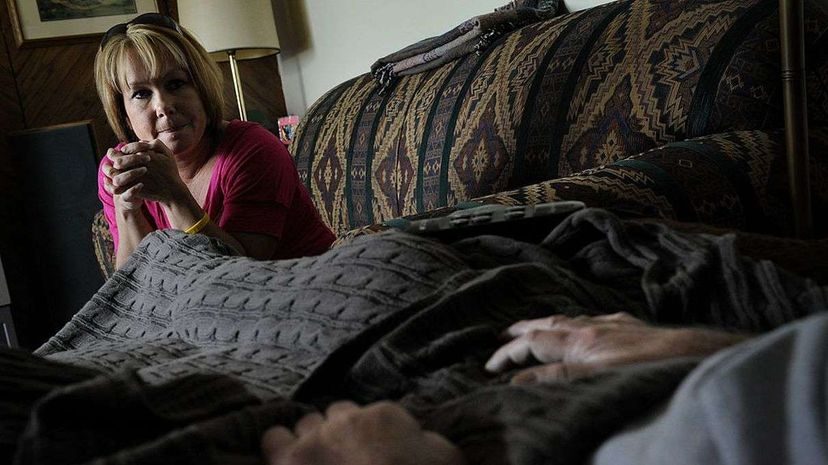
It’s a number that sticks in your throat. Fifty-two percent of people turning 65 today will need some form of long-term care. We’re talking about the gritty stuff. Bathing. Dressing. Eating. Using the bathroom. Most folks will only need this help for a year or two. The majority, anyway.
We’d prefer to sweep that statistic under the rug. Pretend it’s someone else’s problem. But the clock is ticking. Who will actually take care of you when you get old?
Right now, the system relies heavily on unpaid help. Adult children in the U.S. provide about half of all informal caregiving. Daughters do 29 percent of the work. Sons do 18 percent. Spouses cover another 20 percent. This data comes straight from the U.S. Department of Health & Human Services.
“Informal care is absolutely essential,” says Richard Johnson. He directs the Program on Retirement Policy at the Urban Institute in Washington, D.C. Think tanks like that one spend their days looking at the cracks in the foundation.
“It’s a lifeline for most older people with disabilities,” Johnson says. “They could not remain living in the community without help from their children.”
Even when an older person moves into a nursing home, their children usually still provide a lot of hands-on care. Visits. Phone calls. Coordination. It’s not just physical help. It’s oversight.
But what if you don’t have any kids?
According to a February 2016 report from the Urban Institute, the landscape is shifting. One in five American women born after 1970 will have no children at all. Fertility rates are dropping. The population is getting older. These two trends are colliding.
In 2010, there were seven potential caregivers for every person older than 80. By 2050, that ratio drops to three. Just three.
So who takes care of the tens of millions of elderly and disabled Americans who have no children? It’s a question that will dominate healthcare policy for decades.
Johnson points out that other family members often step in. Siblings. Nieces. Nephews. Friends can also fill the gap. Members of the LGBT community, for instance, have long relied on extended family members and younger friends for informal care. It’s a support network built on choice, not just biology.
Even neighbors can be a resource. The New York Times recently covered the story of an older single woman without children. She recruited two friendly neighbors in her building to hold power of attorney over her long-term care. They aren’t going to bathe her. They aren’t going to feed her. But they can make arrangements. They can hire paid home care or secure a spot in assisted living.
This leads us to the next option for people without children: paying for it yourself.
Home care nurses cost about $21 per hour on average. That adds up. But it’s nowhere near as expensive as a nursing home. A private room in a nursing home costs an average of $6,235 per month. Assisted living is cheaper, at $3,293 for a private room.
Johnson notes a steep decline in the number of older Americans entering nursing homes. These facilities are now viewed as a “last resort.” Most people prefer aging in place with some help.
People without kids are an exception. They are significantly more likely to go into a nursing home than people with children. This is one of the challenges arising in the coming decades. As the availability of family caregivers shrinks, the demand for nursing homes will rise.
Here is the catch. Medicare does not cover nursing homes. It covers short-term skilled nursing after a hospital stay, but not long-term custodial care. So most people pay out of pocket until their savings run out. Then Medicaid kicks in. You burn through your assets.
You can buy long-term care insurance to help pay for this. But it’s expensive. An estimated half to two-thirds of Americans can’t afford it. The average cost is about $3,000 a year for a typical policy if you’re in your 50s.
There is one upside to being childless. You can save all the money you don’t spend on raising kids. The U.S. Department of Agriculture estimates the average cost of raising a child at $245,340. And that excludes college.
“People who don’t have kids have significantly more retirement resources,” Johnson says. “So they’re in a better position to purchase care.”
At least, we hope so. Savings don’t always translate directly to care options. Market volatility doesn’t care about your retirement plan.
Whether you have no kids or six of them, it pays to start thinking now. How would you like to live out your last years? Who do you want to take care of you?
Not everyone with kids wants their adult children to be responsible for them. Some don’t want to burden their offspring. Many times the children live too far away for day-to-day help. And some parents and kids are estranged. The family dynamics are messy.
According to a 2012 survey from Fidelity Investments, 97 percent of parents and their adult children disagreed on whether the child would take care of a parent if they became ill. That’s a massive disconnect.
The reason? Very few families in Fidelity’s study had actually had these conversations. They assumed. They hoped. They didn’t talk.
Even if retirement is decades away, start having frank conversations. Talk to your children. Your nieces. Your siblings. Your friends. Your neighbors. Decide who you want to care for you. Decide in what setting.
It might be the best insurance policy you can buy. Or at least, it’s the only thing you can control.
In Japan, more than 25 percent of the population is 65 and older. The U.S. won’t reach that milestone until 2050.
The Japanese government subsidizes mandatory long-term care insurance. They promote preventative care to keep people healthy and independent longer. It’s a different model. Heavily state-backed. We might learn something from it.
Or we might just keep assuming someone will be there.