The Boston Braves were the definition of a bad baseball franchise. You could almost call them a joke. After the Miracle Braves of 1914 pulled off that impossible run from last place on July 4th to a World Series sweep of the Athletics, the club just… collapsed. Every summer became a ritual of sinking into the second division.
From 1922 to 1932, they never finished higher than fifth. Their winning percentage in the 1920s was a dismal .394. Only the Red Sox did worse. It fueled the curse theory—the idea that selling Babe Ruth to the Yankees had poisoned Boston baseball forever.
Then, suddenly, the impossible happened. The Babe seemed destined to wear a Braves uniform.
The Attendance Crisis
Fans weren’t showing up. Attendance dropped to 117,478. That is fewer people than you see in a good week at Yankee Stadium.
Even when manager Bill McKechnie turned things around, the crowd stayed away. In 1933, a pennant chase brought a record 517,803 fans. The next year? The team posted its best record since 1916 (83-71) and finished fourth. The attendance? Just 303,205.
Why? Two reasons. First, the weather at Braves Field was brutal. Cool winds blew off the Charles River. Smoke from a nearby rail yard drifted into left field. The park was a concrete monument to the dead-ball era. Center field fences stood over 500 feet from home plate.
Second, the competition was right down the street.
The Fenway Factor
Tom Yawkey was spending money on the Red Sox. He bought Lefty Grove. He brought in the Ferrell brothers—Wes and Rick. He added Joe Cronin. He also fixed up Fenway Park. It became one of the nicest places to watch baseball in America.
The Braves had only one real star: Wally Berger. He held the National League rookie home run record with 38 homers. He was the only Brave to ever hit 20 home runs in a single season at Braves Field.
Fans preferred the short porch at Fenway. They wanted long-ball action. They didn’t want to stare at a wall half a mile away.
Ownership in Trouble
The Braves somehow made money from 1930 to 1933. But Judge Emil Fuchs, the team president and co-owner, spent it faster than he made it.
In 1933 alone, he claimed to have spent $159,000 against a $150,000 profit. He still owed $200,000 to minority partners Charles Adams and Bruce Wetmore. They had saved him in 1927 by buying stock. Now, Fuchs wanted out. He tried to sell his interest. No one bought it.
He was in the same spot Harry Frazee had been a decade earlier. Desperate.
The Dog Racing Scheme
Before the 1934 National League meetings, Fuchs had a plan. He would turn Braves Field into a dog racing track. The Braves would move into Fenway and share it with the Red Sox.
It wasn’t new. The Braves had borrowed Fenway for the 1914 World Series because their stadium was under construction. They returned the favor by letting the Red Sox use Braves Field for the 1915 and 1916 Series. Boston won all three. Everyone made more money from the larger shares.
This time, it didn’t work.
Tom Yawkey hated the idea. He wanted the Red Sox to be the only team Bostonians cared about. The other NL owners hated the idea of gamblers and greyhounds taking over a major league park.
Fuchs gave up. The owners of Braves Field threatened to evict him for the Boston Kennel Club. The National League stepped in. They guaranteed the rental and loaned Fuchs $7,500 for spring training.
He was saved. For now.
The Manager Idea
The biggest day in Boston baseball the previous year? When Babe Ruth came to town.
Mayor James Michael Curley pushed Fuchs to hire the Babe as manager. Fuchs said no. He was committed to McKechnie.
“I’m committed to McKechnie,” Fuchs said. “He’s a most satisfactory manager and can stay with me as long as he’s in baseball.”
But the idea stuck. The more he thought about it, the more he liked the vision of Babe Ruth in a Braves uniform.
The Deal
There were problems. Ruth said he would never sign a player contract unless he could also manage. Jacob Ruppert said he would never release him. Ed Barrow, the Yankees’ GM, just wanted Ruth gone.
Barrow worked out a plan.
“I’m ready to make an offer for Ruth,” Fuchs said in Boston. “We will make him assistant manager and give him an official position if he comes to the club, and he can play as often as he likes.”
Nobody asked what an assistant manager actually did. But Ruth was interested. He was back in New York on the S.S. Manhattan, returning from an exhibition tour in Asia. He talked to reporters about “having something under consideration that I can’t talk about right now…. All I can say is, it has to do with big league baseball.”
The stage was set. The Braves were broke. The Red Sox were king. And the Babe was looking for a place to play.
The hook was set.
Ruth didn’t hesitate. He called Ruppert the next day to dissect the Braves’ pitch. Then he picked up the phone for Judge Emil Fuchs.
Here’s the deal, according to Fuchs.
Babe becomes a vice president. He gets a cut of the profits. He gets first dibs on buying club stock.
He’s also assistant manager to Bill McKechnie. In a year, maybe less, McKechnie moves up to general manager. Babe takes the mantle.
He plays when he feels like it. He pinch-hits the rest of the time.
His base salary? $25,000.
That’s more than McKechnie. More than anyone on the roster.
Fuchs sent the details in a letter. It was polished. It was professional. It was a lie wrapped in legal silk. The document promised nothing but a standard player contract with a fancy title slapped on top.
“In order that we may have a complete understanding, I am putting in the form of a letter the situation affecting our long-distance conversation of yesterday.”
The letter arrived February 23, 1935.
It listed six “inducements.”
- A straight salary contract.
- An official executive position.
- Assistant manager duties for 1935.
- A share of profits.
- An option to buy stock at a “reasonable figure.”
- Separate personal contracts for the financial details.
Fuchs expected Babe to do everything for the club. Play when possible. Manage when needed.
He praised New England. Called the fans appreciative. Asked for loyalty in return. Civic duty. Consolation for children. Be the shining example.
Then came the kicker.
Fuchs admitted Babe’s true value wasn’t in managing. It was in his name. His presence.
“Your greatest value to a ball club would be your personal appearance on the field… particularly your participation in the active playing of exhibition games.”
He praised Babe’s baseball IQ. Never saw a wrong play. Never a bad throw. That made him a natural manager.
But he also praised McKechnie. Called him unselfish. Devoted. A friend.
The plan was clear. McKechnie stays loyal. He gets rewarded. Babe takes over management later. If Babe prefers ownership? Fine. If he just wants to hit? Fine.
But the public needed to see him.
Sincerely,
Emil E. Fuchs, President
Ruth read it.
He didn’t show it to a lawyer.
He missed the loopholes. He missed the fine print that bound him to a player contract, not a management guarantee.
He called Ruppert one last time. Asked if McCarthy was really the best choice for the Yankees.
Ruppert said yes.
Ruth signed.
The Reality of the Offer
The letter Fuchs sent follows:
Mr. George H. Ruth, New York, N.Y. February 23, 1935
My Dear George:
In order that we may have a complete understanding, I am putting in the form of a letter the situation affecting our long-distance conversation of yesterday.
The Boston Braves offer you the following inducements, under the terms and conditions herein set forth, in order to have you sign a uniform contract plus an additional contract which will further protect you, both contracts to be filed.
-
The Boston club offers you a straight salary contract.
-
They offer you an official executive position as an officer of the corporation.
-
The Boston club offers you also the position, for 1935, of assistant manager.
-
They offer you a share of the profits during the term of this contract.
-
They offer you an option to purchase, at a reasonable figure, some of the stock of the club.
-
The details of the amounts agreed upon will be the basis of a separate contract which shall be a personal one between you and the club, and, as the case, be with the individual officials and stockholders of the club.
In consideration of this offer, the Boston club naturally will expect you to do everything in your power for the welfare and interest of the club and will expect that you will endeavor to play in the games whenever possible, as well as carry out the duties above specified.
May I also give the picture as I see it, which, in my opinion, will terminate to the best and mutual interest of all concerned.
You have been a great asset to all baseball, especially to the American League, but nowhere in the land are you more admired than in the territory of New England that has always claimed you as its own and where you started your career to fame.
The fans of New England have a great deal of affection for you, and from my personal experience with them are the most appreciative men and women in America, providing, of course, that you keep faith, continue your generous cooperation in helping civically and being a source of consolation to the children, as well as to the needy, who look up to you as a shining example of what the great athletes and public figures of America should be.
I say frankly, from my experience of forty years interest in baseball, that your greatest value to a ball club would be your personal appearance on the field, and particularly your participation in the active playing of exhibition games, on the ball field in championship games, as well as the master-minding and psychology of the game, in which you would participate as assistant manager.
As a player, I have observed and admired your baseball intelligence, for during your entire career I have never seen you make a wrong play or throw a ball to the wrong base, which leads us to your ability to manage a major league baseball club. In this respect we both are fortunate in having so great a character as Bill McKechnie, our present manager of the club, who has given so much to baseball and whom I count among my closest friends. Bill McKechnie’s entire desire would be for the success of the Braves, especially financially, as he is one of the most unselfish, devoted friends that a man can have.
That spirit of McKechnie’s is entirely returned by me, and I know by my colleagues in the ball club. They feel, as I do, that nothing would ever be done until we have amply rewarded Manager McKechnie for his loyalty, his ability and sincerity, which means this, George, that is it was determined, after your affiliation with the ball club in 1935, that it was for the mutual interest of the club for you to take up the active management on the field, there would be absolutely no handicap in having you so appointed.
It may be that you will want to devote your future years to becoming an owner or part owner of a major league ball club. It may be that you may discover that what the people are really looking forward to and appreciate in you is the color and activity that you give to the game by virtue of your hitting and playing and that you would rather have someone else, accustomed to the hardships and drudgery of managing a ballclub, continue that task.
So that if we could enter into the spirit of that agreement, such understanding might go on indefinitely, always having in mind that we owe a duty to the public of New England that I have personally learned to love for its sense of fairness and loyalty, and it is also in this spirit that I hope we may be able to jot down a few figures of record that will prove satisfactory to all concerned.
Sincerely yours,
Emil E. Fuchs, President
Ruth never showed this monstrosity to a lawyer, nor did he pick up on its subtle loopholes. After asking Ruppert one more time if McCarthy was the best man to manage the Yankees (the colonel assured him he was), Ruth decided to take the offer.
Jacob Ruppert and Babe Ruth flew to Boston. They sat down with Francis Lee Fuchs, the new owner, and finalized the mechanics of the split. The next day, they walked into a press conference in New York. The air was thick with polite fiction. Ruppert praised his star. Ruth praised his former boss. It was a masterclass in corporate doublespeak.
Then came the paper.
Ruppert slid a single sheet across the table. Sixteen words. That was the end of a fifteen-year dynasty.
“Mr. George H. Ruth: You are hereby notified as follows: 1. That you are unconditionally released. (Signed) Jacob Ruppert.”
Ruth later wrote that this staged severance made him “sick.” But that day? He smiled. The cameras clicked. The deal was sweet.
The Vice President Illusion
When reporters asked what Ruth would actually do as vice president, he paused. The silence stretched. Fuchs jumped in, eager to fill the void. He said Ruth would be “consulted on trades and so forth.”
Colonel Fuchs couldn’t resist a jab. “A vice president signs checks,” he said.
The room laughed. It was a nervous, sharp sound.
In Boston, Tom Yawkey was already spinning the narrative. He predicted the move would benefit the city. He claimed Boston could support two teams well. It was just six days since Ruth had arrived. He was sad to leave New York, yes, but the optimism was suffocating. This wasn’t a demotion. It was a promotion. Or so he hoped.
He told reporters he and manager Billy McKechnie would get along “lovely.” He talked endlessly about his pending managerial career. He was excited. He believed this was the start of a profitable new chapter.
The Reality of Management
A few days later, at a massive Boston dinner, Fuchs doubled down on the verbal runaround. But then came the cold water from McKechnie.
The manager was done playing nice.
“The Babe would help any ball club,” McKechnie said, his tone icy. “But I’m interested in him only as a player. He wouldn’t be worth a plug nickel to us if he didn’t get into uniform and go up there to bat.”
When a headline prematurely announced “Babe Ruth to Manage Braves in 1936,” McKechnie’s response was blunt. “That’s news to me.”
The illusion shattered. Ruth was not a manager. He was a player. And an inconvenient one at that.
The Return to Back Bay
It had been twenty-one years since a Baltimore train deposited a nineteen-year-old pitcher at Back Bay Station. Now, George Herman Ruth Jr. was coming home.
But the young pitcher was gone. The man arriving in St. Petersburg for spring training weighed 245 pounds. He was out of shape. There had been no winter workouts at Artie McGovern’s gym. No discipline.
Photographs from his first days showed the truth. His stomach protruded like a medicine ball stuffed under a sweatshirt. Eventually, the team realized the only solution was to keep his uniform on him at all times. The white jersey with red trim looked alien after years of pinstripes. They didn’t even have a size. He wore an ill-fitting hand-me-down from catcher Shanty Hogan.
Crowds flocked to see him. A March 16 exhibition against the Yankees in St. Petersburg drew the largest gathering ever for a Florida spring game. The media was there. The fans were there.
The performance? Nonexistent.
He hit no home runs in that first month. The revitalization he felt in Japan was a mirage. He didn’t belong in the outfield. He wasn’t producing. McKechnie moved him to first base, replacing holdout Baxter Jordan. It didn’t help. At least he didn’t have to run.
“It was a rotten feeling,” Ruth later admitted. “The kids were striking me out or making me pop up.”
The only comfort came from Walter “Rabbit” Maranville. The forty-three-year-old shortstop. Five-foot-five. One hundred fifty-five pounds. A pixie with a taste for trouble. They bummed around together, two old-timers nearing the end of the line, bonding over shared irrelevance.
McKechnie, meanwhile, was fuming. The attention on Ruth was annoying. The talk of succession was irritating. When asked again about Ruth’s “leadership role,” the manager snapped.
“Ruth’s title as assistant manager means nothing particularly.”
The Hubbell Mismatch
Ruth finally showed a spark. Three exhibition home runs as the team traveled north. Then, April 16, 1935.
Opening Day at Braves Field. Boston vs. the Giants.
It was Ruth’s first time playing there since he pitched the 1916 World Series. Twenty-two thousand fans. Three of them were governors. The temperature was thirty-nine degrees. They didn’t care about the cold. They wanted to see if the myth could survive the man.
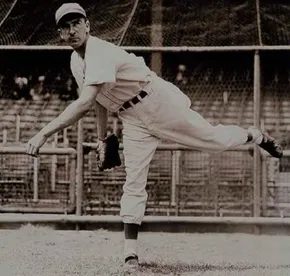
On the mound for New York was Carl Hubbell.
Hubbell was the best pitcher in baseball. He had just gone 21-12. He had five consecutive All-Star strikeouts. He was coming off a season that defined dominance.
Ruth stepped into the box. Portly. Forty years old. One runner on base.
It looked like a mismatch. It was.
Ruth lined a single to right field. He drove in the first run. Moments later, he scored the second. 2-0 Boston.
In the top of the fifth, Hubbell came to the plate. Runner on base. Hubbell lined a shot to left field.
Babe Ruth ran past the foul line. He caught the ball with one hand.
The crowd roared. For a moment, it felt like 1916 again.
But it was just one play. One moment. The rest of the season was a slow, grinding collapse. The “vice president” was a joke. The manager was a prisoner in his own stadium. And the fans? They were beginning to realize that the magic was gone.
The uniform fit poorly. The body fit poorly. The role fit not at all.
Ruth stayed in Boston for four years. He never managed. He barely played. And every time he stepped to the plate, the ghosts of New York whispered in his ear. The check he signed. The release he accepted. The lie he sold.
It didn’t end with a bang. It ended with a shrug.
The Brutal Reality of a Boston Summer
Babe had runners on base again in the bottom of the inning. This time, he didn’t just hit the ball; he obliterated a Jack Hubbell screwball into the right-field bleachers. It was the first National League home run of his career. The score jumped to 4-0. Boston won 4-2. And Ruth, ever the showman, told the press he couldn’t believe he’d started so strong.
“I didn’t dream I’d ever get off to such a start.”
The city lost its mind. Especially after Game 2, when Ruth added two more hits. The narrative crystallized instantly. The Braves were going all the way. The Babe was the engine. It made for incredible newspaper copy. It was also pure fantasy.
Ruth wasn’t in shape to be a savior. This wasn’t a championship team. Berger was a slugger, sure, but only because Braves Field was a bandbox. Otherwise, the roster was devoid of legitimate stars. It was mediocre at best. The distractions caused by Ruth’s presence were toxic. McKechnie struggled to maintain control. The on-field play suffered.
Bill didn’t know it yet, but the honeymoon was ending. Over the next month, he recorded just two more hits. One was a homer off the Dodgers on Easter Sunday. The other? Nothing notable. His batting average plummeted below .200. He missed games with a cold. He missed others with various other ills. The club had already settled into the second division. Reality set in at Braves Field. The few fans who showed up booed unmercifully.
The profit-sharing model wasn’t working. Neither was his supposed leadership role. As a vice president, Ruth’s duties boiled down to being a greeter and a front-office puppet. McKechnie, increasingly perturbed, sought no advice from his “assistant manager.” The team wallowed near the cellar.
Eventually, the scheme became clear to Ruth. McKechnie wasn’t getting promoted to general manager. He wasn’t taking Bill’s place. The contract and Fuch’s letter were a public relations scam.
The realization was unsettling. Ruth had given over 20 years to the major leagues. He had saved baseball from extinction after its greatest scandal. And now he was being denied a chance to stay in the game on his own terms. For the greatest hero in American sports history, it felt like a bad ending.
But it was an epilogue. Ruth was not far from retirement. The next chapter of his departure from the game reveals how he finally left the field.
For more context on this era of baseball and its players:
- Baseball history
- Minor League Baseball development
- Baseball Hall of Fame induction criteria