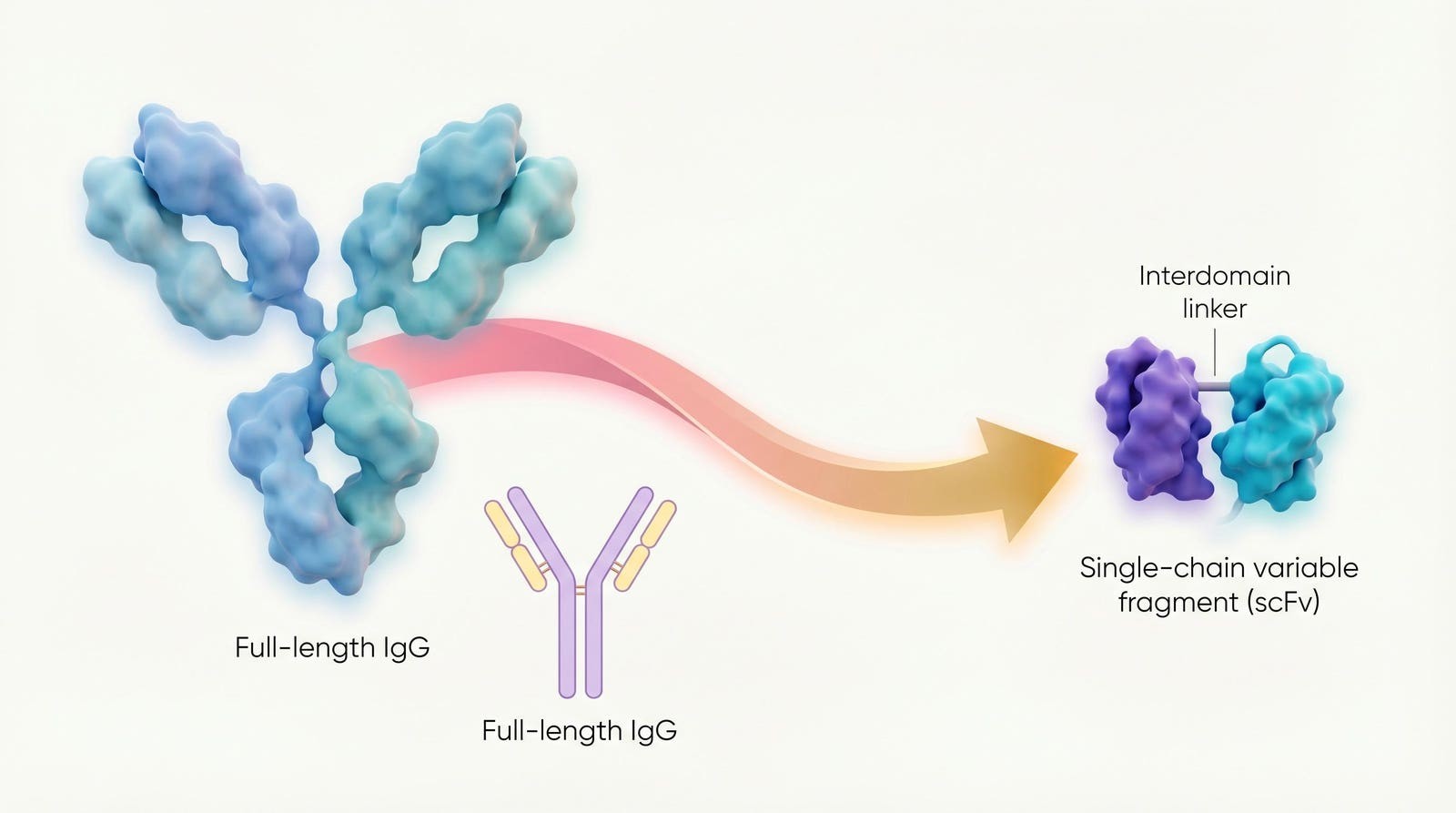
For decades, antibody-based drugs have served as the backbone of modern medicine. Their superpower lies in precision : these proteins are designed to recognize and bind to specific structures on the surfaces of viruses, bacteria, or diseased cells. However, this precision has always come with a significant limitation—antibodies are essentially “external” tools. They can patrol the bloodstream and cling to the outside of a cell, but they have historically been unable to penetrate the cell membrane to tackle threats lurking within.
That barrier is now beginning to crack. Through a combination of protein reengineering and artificial intelligence, scientists have developed a way to bring the targeting power of antibodies inside the cell.
The Challenge: Why Cells Are Hostile to Antibodies
To understand why this is a breakthrough, one must understand why previous attempts failed. While researchers have long tried to “shrink” antibodies into smaller fragments that could theoretically slip into cells, these fragments rarely survived the journey.
The interior of a cell is a chemically distinct environment compared to the bloodstream. The primary obstacle is electrical charge. Standard antibody fragments often carry a charge profile that, when placed inside a cell, causes them to:
– Aggregate: The fragments stick together in useless clumps.
– Misfold: They lose their functional shape.
– Degrade: They break down before they can reach their target.
In short, the very mechanism that makes them effective outside the cell makes them unstable inside it.
The Solution: AI-Driven Redesign
A new study has introduced a modular platform to solve this stability crisis. Rather than trying to force traditional antibodies into cells, researchers are reengineering them from the ground up to thrive in the intracellular environment.
By focusing on adjusting the charge distribution of the antibody’s target-binding portion, scientists have successfully created more than 600 stable intracellular antibody fragments.
How the process works:
- Target Preservation: The redesign focuses on how the antibody behaves inside the cell, not what it binds to. This ensures the drug still recognizes its specific target.
- AI Integration: Artificial intelligence is used to model and modify protein structures, allowing for the rapid conversion of existing antibodies into “intracellular-ready” versions.
- Scalability: Because this is a modular framework, it can be applied to hundreds of existing antibodies, creating a massive library of new therapeutic tools.
A Lifeline for Neurodegenerative Diseases
The most profound implications of this technology lie in the treatment of neurodegenerative diseases.
Conditions such as Alzheimer’s, Parkinson’s, Huntington’s, and motor neuron disease are driven by a common, devastating mechanism: the buildup of toxic, misfolded proteins inside the cells of the brain. Because these “molecular engines” of disease are hidden behind the cell membrane, traditional antibodies are powerless to stop them.
With this new approach, therapies can:
– Target the source: Directly bind to harmful protein aggregates at the exact site of damage.
– Maintain high selectivity: Distinguish between healthy proteins and diseased, misfolded versions, minimizing side effects.
– Leverage gene delivery: Future treatments could use gene-based technologies to instruct a patient’s own cells to produce these redesigned antibody fragments internally.
The Broader Impact
While neurodegeneration is the most immediate frontier, the potential applications of an intracellular antibody platform are vast. This technology could eventually be adapted to treat cancer biology, inflammatory disorders, and rare genetic conditions where the disease-driving mechanism is localized within the cell.
This shift represents a fundamental change in biological strategy: moving from treating the symptoms on the cell surface to addressing the molecular drivers at the heart of the disease.
Conclusion
By overcoming the chemical barriers of the cellular interior through AI-guided engineering, scientists have unlocked a new dimension of drug development. This breakthrough transforms antibodies from external sentinels into internal precision tools, offering hope for treating some of the most complex and devastating diseases known to medicine.