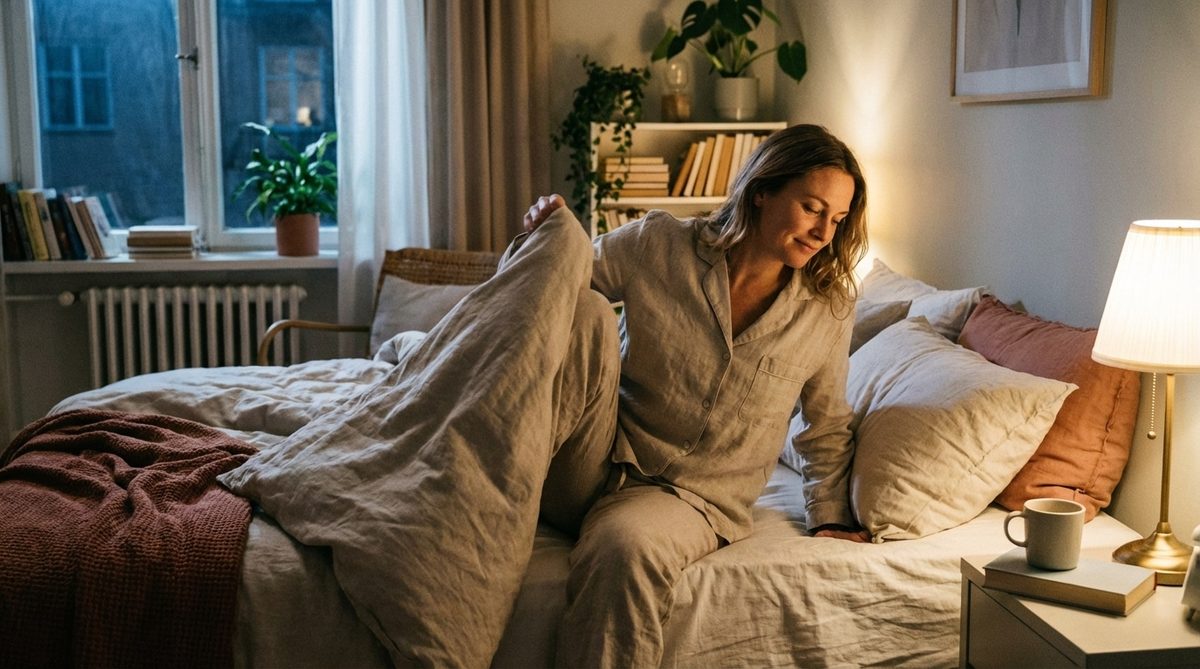
It is 23:45. You are exhausted. Your limbs feel heavy, gravity seems to have doubled, and yet your brain refuses to shut down. You stare at the ceiling, wondering why sleep is elusive when you are physically drained. In January 2026, with long, dark winters, this frustration feels personal. It is not a curse. It is likely a modern habit that quietly disrupts your internal clock.
The Paradox of Wokeness
There is nothing more maddening than physical exhaustion clashing with mental alertness. Your body screams for rest. Your eyes burn. Your muscles ache from the day. But your mind? It is wide awake. This dissonance is sleep disruption from blue light exposure.
You might blame your dinner. Was it too spicy? Too heavy? You might point to work stress or a sedentary day. These factors matter. But they often distract from the immediate culprit. The root cause is usually simpler. It is in the room with you. It is in your hand.
The Digital Trap
We assume scrolling through social media or watching a show is relaxing. We lie down. We tell ourselves we are decompressing. We are lying to ourselves.
This habit keeps your nervous system in high gear. You are not resting. Your brain is processing notifications, bright colors, and engaging content. It is in overdrive. The devices we use are not passive objects. They are active stimulants.
- Smartphones on nightstands
- Tablets used for late-night binge-watching
- Backlit e-readers
- Laptops on laps
These screens are windows to a world that demands attention. They actively prevent night from falling in your bedroom.
The Retina’s Deception
The issue is the light itself. Screens emit high-energy visible light. We call it blue light. In nature, this light exists at noon. It is the sun’s signature. It signals wakefulness. It says: Get up. Be active.
When you look at a screen at night, you send a false signal. Your retina detects the blue light. It sends a message to your brain’s master clock. The message is clear: It is daytime.
Your body feels tired from the day’s exertion. Your brain receives a command to stay awake. You create a artificial time zone shift. You stay in bed, but your biology thinks it is noon. In January, when darkness falls early, this artificial daylight persists long past your body’s limits.
Sabotaging Melatonin
This optical illusion has a chemical consequence. It halts melatonin production.
Melatonin is the hormone of sleep. It lowers body temperature. It reduces alertness. It tells your cells it is time to recover. Its release depends on darkness.
When you expose yourself to artificial light, you flip a switch. The production stops. Using your phone in bed does not just delay sleep. It depletes your chemical reserves.
There is a lag time. Turning off the screen at midnight does not instantly flood your brain with melatonin. The body needs time to restart. During this gap, you lie awake. Frustrated. Waiting.
The lights are off. But the signal remains.
The Hidden Glare in Your Living Room
Smartphones get all the blame, but they are not the sole culprits keeping your brain in a state of high alert. The lighting fixtures in your home play an equally significant role in this sleep-disrupting pollution. In recent years, traditional incandescent bulbs have largely been replaced by LEDs. While these are cost-effective, many emit a harsh, cold white light rich in blue wavelengths—similar to the glow from your digital screens.
A living room bathed in bright, raw light right up until bedtime keeps your organism in a perpetual state of readiness. Moving from a brilliantly lit living area to the darkness of your bedroom often fails to trigger instant sleep. Why? Because your biological brake has been held down for too long, delaying the onset of drowsiness.
Furthermore, your bedroom itself may be polluted by insidious light sources:
- The standby LEDs on televisions or computers;
- The digital display on your morning alarm clock;
- Streetlamp glow filtering through inadequately closed curtains.
Even with your eyelids shut, excessive ambient light can disrupt sleep depth and the quality of your nocturnal cycles.
A Plan to Banish Blue Light
Fortunately, the solution is as simple as the problem is technological. It requires restoring order to your light hygiene. The most effective measure, though challenging for many, is establishing a digital curfew. Create a buffer zone of at least one hour with zero screen time before your intended bedtime.
During this sacred hour, replace scrolling with activities that do not emit blue light. Reading a physical book (under soft lighting), listening to a podcast or gentle music, doing light stretches, or practicing breathing exercises are all effective ways to signal to your body that the day is over.
Small technical adjustments to your environment can also provide significant relief:
- Install software or enable “Night” or “Eye Comfort” modes on devices you must use in the evening. These filter part of the blue spectrum, tinting the screen orange or red;
- Prioritize bulbs with a warm color temperature (below 2700 Kelvins) in your living room and bedroom. These mimic the light of fire or sunset;
- Use blackout curtains to block any external light pollution.
Tonight, Switch Everything Off
Breaking this vicious cycle starts tonight. The changes require no financial investment, only discipline and awareness. By accepting that your phone charges in another room—or at least far from your bed—you gift your brain the silence of visual noise.
Imagine the pleasure of feeling sleep arrive naturally. No struggle. Just closing your eyes and sliding into deep rest. By eliminating artificial light stimulation, you allow your melatonin to do its job. The result is inevitable: more restorative nights and awakenings where mental fog has vanished, replaced by renewed energy to face the winter days.
So tonight, instead of scrolling through the lives of others on a glowing screen, why not simply turn off the light and reconnect with your own dreams?