Ten years. That is the milestone. One-third of patients hit with aggressive lymphoma remain cancer-free after just one dose of CAR-T therapy.
Another group with a slower-burning version of the disease? Nearly half are also in the clear. This looks like a cure. A real one. We used to view these diagnoses as a countdown. Now it feels more like a door left open.
The subjects here had already burned through everything else. Standard treatments failed. Chemo did nothing or made things worse. Their only option was essentially nothing.
A single infusion changed the clock.
Engineered T-cells went into their blood a decade ago. Those cells did the heavy lifting that other drugs simply couldn’t touch. It shifts how we look at medicine entirely. Drugs are chemical bullets. These are living entities. They program the immune system. We dug into this transformation in our recent book, CAR T: A New Cure for Cancer.
What the Cells Do
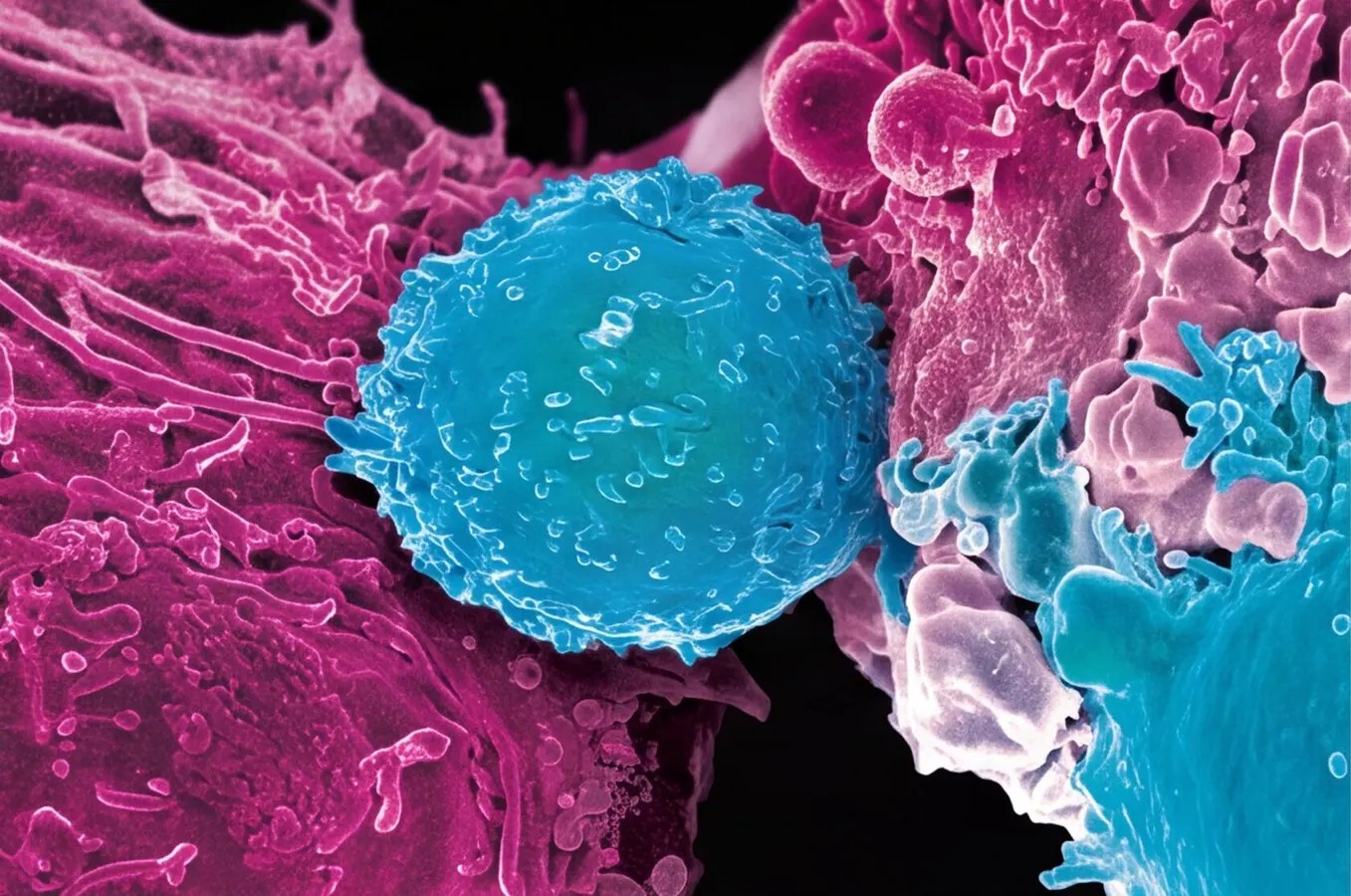
You pull T-cells from a patient’s vein. They sit in a lab for a bit while engineers give them new eyes. Specifically a receptor.
This receptor locks onto CD19. A marker sitting on B cells.
Doesn’t matter if the B-cell is healthy or malignant. The CAR-T cell sees CD19 and it attacks. It destroys the cell. It’s precise but blunt force trauma.
The treatment here was among the first approved in the US. Here is the protocol.
1. Chemotherapy to clear space.
2. A single infusion of the armed T-cells.
3. Patrolling begins.
Once inside they multiply. They hunt. As long as there is cancer to kill they stay.
The Numbers Don’t Lie
University of Pennsylvania researchers tracked 38 people. They didn’t just check in at one year or three. They waited. Nearly a decade for some. All had non-Hodglin lymphoma.
– 24 with aggressive large B-cell lymphoma.
– 14 with a indolent slow-growing version.
Look at the ten-year mark for the aggressive group. 32% remain free of the disease. For the slower group, 47% are lymphoma-free. Half are alive.
It gets better if the body responded early. 54% of the aggressive cohort and 60% of the indolent cohort have stayed in remission continuously since that infusion.
Scientists used Kaplan-Meier curves to plot this. These lines show who lives and who relapses. Usually these curves keep dipping. Not here. A plateau forms. After about five to six years the line flattens completely. No new relapses appeared beyond six years post-treatment.
Did anyone relapse later? No.
If you made it to the sixth year you were safe. Really safe.
Why This Matters
Before CAR-T these patients had maybe six months left. That was the average survival. Six months.
Now one in three beats cancer for ten years. The curves are flat after five years meaning deaths stop. Relapses stop. For a disease that kills within months that shift is radical.
The Price Paid
Nothing is free. Almost half of the long-term survivors have B-cell aplasia. That means their bodies can’t make healthy B-cells anymore.
They are vulnerable to infection. Many need regular infusions of donor antibodies to survive. Some had lasting low blood counts too.
And then there are second cancers.
Nine patients developed a new unrelated cancer during follow-up. Higher than average. It mirrors the risk seen in other survivors of heavy chemotherapy. It reminds us: monitor these patients. Keep watching them.
But the overall safety picture? Manageable. No late-onset heart failure. No liver failure. The immune system rebuilt itself mostly on its own. Infections didn’t spiral out of control.
What Comes Next
Remissions aren’t just temporary pauses anymore. They can last.
The conversation shifts. It used to be a Hail Mary with an unknown endpoint. Now it’s a legitimate option for long-term survival.
We have new CAR-T products targeting different markers. Combinations with other immunotherapies. Blood cancers are getting hammered with good news.
The real test is solid tumors. Lung cancer. Brain tumors. Pancreatic.
CAR-T struggles there so far. The tissue structure gets in the way. The microenvironment is hostile. Trials are underway. Lessons from these 10-year survivors will guide us there.
It works for lymphoma. The question remains: why not everything else?