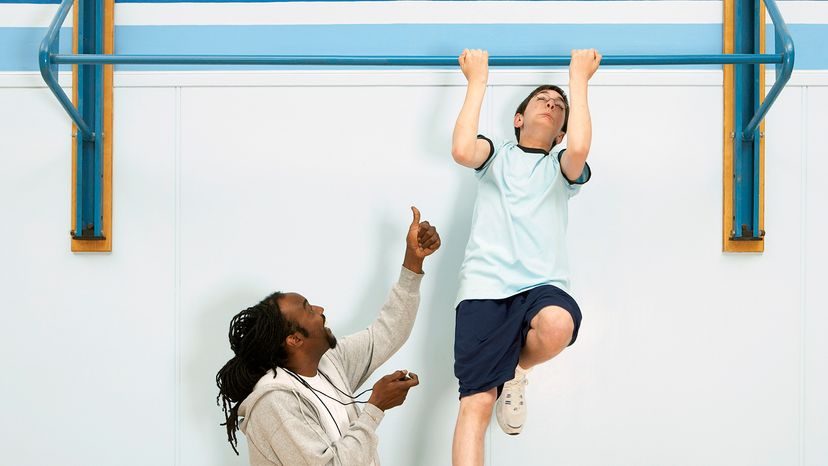
I spent most of middle school hiding in the gymnasium bathroom to avoid the pull-up bar. Twenty years later, despite hundreds of hours in yoga studios and countless workout trends, I still can’t do one. It doesn’t matter for my adult life. It mattered immensely in seventh grade.
The shame was real because I was part of the millions of American children subjected to the Presidential Fitness Test. This battery of physical feats was designed to assess the health of school-age children. The test has since been retired. It was replaced by the FITNESSGRAM. This newer test is less arbitrary and far more forgiving. But it left a significant mark on scholastic history.
“The physical fitness tests students have to take are in fifth, seventh and ninth grades in public schools in California,” says Marisol Visalli. She is a San Francisco Bay Area-based physical education teacher and massage therapist. “It’s similar in other states as well. We are testing to collect data on the five categories of fitness — cardiovascular fitness, muscular endurance, muscular strength, flexibility, and body composition, which is muscle to fat ratio.”
History Behind the Hype
The obsession with youth fitness didn’t start in a vacuum. It began in the early 1950s. Fitness activists Dr. Hans Kraus and Bonnie Prudden administered exercise tests to thousands of kids. They tested children in the United States, Switzerland, Italy, and Austria.
U.S. kids came up shockingly short. Fifty-eight percent of them failed the tests. Only 8 percent of European kids failed.
President Dwight Eisenhower wasn’t pleased. He took action by forming the President’s Council on Youth Fitness in 1956. The goal was to find strategies for improving American kids’ fitness scores. Concern mounted by the time John F. Kennedy took office.
In 1960, Kennedy penned a Sports Illustrated op-ed about the perceived problem.
“In a very real and immediate sense, our growing softness, our increasing lack of physical fitness, is a menace to our security.”
So, in 1966, the Presidential Physical Fitness Challenge commenced. It was a competition designed to “encourage and prepare young Americans for the physical demands of military service,” according to NPR. The challenge included activities like the softball throw. It included the shuttle-run. And, of course, the dreaded pull-up.
To earn the coveted Physical Fitness Awards, kids would have to place in the top 85th percentile based on national standards.
The problem with all this testing was that it didn’t resemble the Kraus-Weber tests in any way. Experts point out that it was usually done in the most public of settings. In front of peers. Rather than focusing on core and arm strength and improved flexibility, the Presidential Physical Fitness Challenge simply reflected the goals and priorities of the country. It reflected the people who’d formed their fitness philosophy during training in World War II. Author Greg Critser explains this dynamic in his book “Fatland.”
President Johnson wound up changing the group’s name to the President’s Council on Physical Fitness and Sports. The tests remained consistent. The pool of award winners was reduced to just the top 15 percent of athletically gifted students.
Years later, in 2012, the test was finally abolished. It was replaced by a more comprehensive fitness program. This new program was designed to support individual goals rather than prescribe a standard fitness regimen. According to NPR, the change was the result of decades of negative feedback from both students and teachers.
“The test was totally backward,” physical education teacher Joanna Faerber told the outlet. “We knew who was going to be last, and we were embarrassing them. We were pointing out their weakness.”
Why Schools Test Fitness Now
The old fear of humiliating run-a-thons is fading. Today’s fitness testing isn’t about sorting the strong from the weak. It’s data collection. States want to know the fitness levels of different demographics, schools, and cities. That’s the official reason.
But teachers are trying to make it mean something.
“We turn it into goal-setting and teaching students about their bodies,” says Visalli, a PE teacher. “We create awards for improvements to get them motivated.”
The approach has shifted away from military-style drills. There are options now. You aren’t forced into a single path.
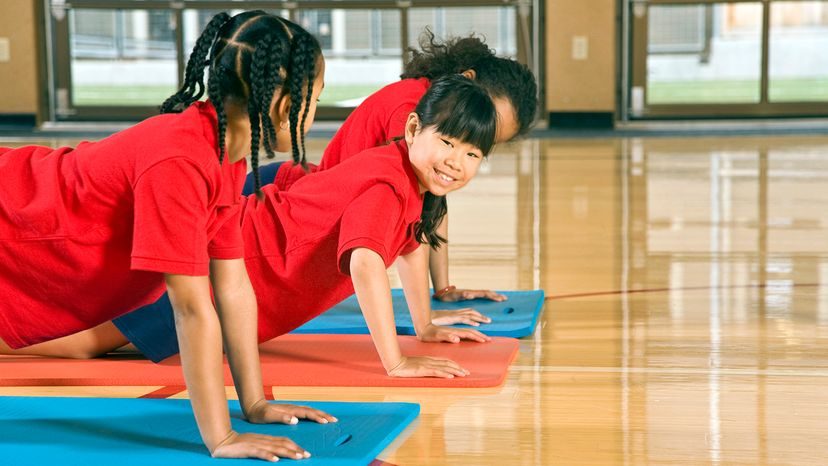
For cardio, you can run a mile or do the PACER test. Muscular endurance offers choices like curl-ups, push-ups, or flexed arm hangs. Flexibility testing includes sit-and-reach or shoulder stretches.
Body composition is where things get messy. Most schools use height and weight. Some still use skinfold measurements. Visalli calls the skinfold test “antiquated” and “total crap.” She’s right to be skeptical. Science has moved on. We know muscle weighs more than fat. Height and weight data alone doesn’t dictate body composition. Ignoring muscle mass in these tests makes them stupid. It makes kids feel horrible.
Who Actually Passes?
Pass rates vary wildly. In Burlingame, California, where Visalli teaches, about 85% of students pass. This isn’t just because of good PE teachers. It’s because these kids are active outside of school. They have access.
In urban, rural, or lower-income areas, pass rates drop. The reasons are simple. Lack of money. Lack of opportunity. Fewer program options. The list goes on. State requirements differ, but California mandates testing for grades five, seven, and nine.
The Test Breakdown
California students must choose from specific options for each category:
Aerobic Capacity
– PACER (Progressive Aerobic Cardiovascular Endurance Run)
– One-Mile Run
– Walk Test (ages 13 and older only)
Abdominal Strength and Endurance
– Curl-Up
Upper Body Strength and Endurance
– Push-Up
– Modified Pull-Up
– Flexed-Arm Hang
Body Composition
– Skinfold Measurements
– Body Mass Index
– Bioelectric Impedance Analyzer
Trunk Extensor Strength and Flexibility
– Trunk Lift
Flexibility
– Back-Saver Sit and Reach
– Shoulder Stretch
Reading that list might leave you winded. Adults can pass these tests too. But their results aren’t compared to kids. The “healthy fitness zones” change by age and gender. Scores differ based on hormones and muscle mass. Boys are expected to do more push-ups after puberty. Their shoulders broaden. Their mass increases.
“Passing” as an adult is relative. The benchmarks are designed for students up to age 17 or 18. Once you leave high school, the numbers matter less.
Check out the FITNESSGRAM Healthy Fit Zone Performance Standards if you’re curious. But take those numbers with a grain of salt. Don’t stress if you can’t do a single pull-up. It matters less in life than we were led to believe in junior high.
The Real Goal
Punishing kids doesn’t work. It never has. But encouraging movement is critical. Physical activity builds cardio fitness. It strengthens bones and muscles. It reduces symptoms of anxiety and depression.
The CDC reports only 21.6% of children and adolescents in the U.S. get 60 or more minutes of moderate-to-vigorous physical activity on at least five days per week.
Most kids aren’t moving enough. The tests might be flawed. The data might be incomplete. But the need for activity is real.