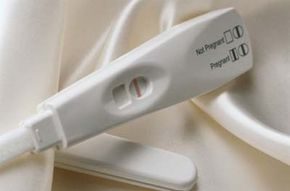
You may notice changes in your body during the first few weeks after conception. What are the most obvious red flags? Your period has stopped. However, relying on it alone is dangerous. Stress, chronic illnesses and hormonal changes can delay periods just as easily as pregnancy. It is not a sure sign that your period is late unless you are at least two weeks late.
Then there is bleeding. Mild spotting may occur during pregnancy. So if you see blood, don’t immediately cross pregnancy off your list. That doesn’t mean it isn’t possible.
Fatigue is often severe during the first few weeks. You may feel more tired than usual. Nausea and vomiting may continue, usually 1-2 weeks after that missed period. Morning sickness is common, but it does not always occur in the morning.
Your breasts might tingle. They could feel tender. They may even enlarge slightly. The areola (dark circle around the nipple) often becomes darker. If you’ve been monitoring your basal body temperature because you’re having trouble getting pregnant, you may have noticed that elevated temperature staying put.
But here’s the problem. All of these symptoms can have other causes. They do not prove you are pregnant. They just suggest that you have to look carefully.
Signs doctors look for
If you wait until your period is two weeks late to see a doctor, your doctor may notice changes in your body. The vagina and cervix turn blue or purple. This is due to increased blood flow and is called Chadwick’s sign.
Your uterus may feel soft. It’s bigger. It gives a more rounded feel.
However, most women know this before going to the clinic. They use home pregnancy tests. You can buy these at any pharmacy. Prices range from $10 to $20.
These commercially available tests detect human chorionic gonadotropin (HCG). A hormone produced by the placenta immediately after conception. This is the key marker.
How home pregnancy tests work
Not all home pregnancy tests are created equal. The sensitivity is different. Some can detect HCG when their period is one day late. In other cases, it may take 1-2 weeks.
The timing of urine sampling is also important. Some tests need to be done on morning urine when HCG concentrations are highest. Some can process collected samples at any time of the day.
The speeds are also different. Some react in one minute. Others take 1-2 hours. If you follow the instructions exactly, the results are 90-95% accurate.
The process is simple. immerse a strip of paper into urine. Or just pee on the test paper. Positive results are usually marked with a single line or a plus sign. Now there are digital tests that display the results in a window. No interpreting lines. No need to guess.
Why False Results Happen?
Even with high sensitivity, false positives and false negatives can occur.
If you are taking fertility drugs, you may get a false positive. The test result is positive even if you are not pregnant.
False negatives are more common. The test result is negative even if you are pregnant. This usually happens when you test too early.
About 10 percent of women have an embryo that implants after the first day of a missed period. Before implantation or if HCG levels are too low, the test will not detect it.
An ectopic pregnancy can also cause decreased HCG levels. This is a condition where the pregnancy occurs outside the uterus. If the first test result is negative and you haven’t had your period yet, wait 5-10 days and take the test again. If your test is still negative but you suspect you are pregnant, contact your doctor.
If you want to skip the home test
Your doctor may prescribe a urine test similar to a home kit. However, in some cases more information may be required.
If you suspect a false negative result or need to know before the urine test, we can order a blood test. More sensitive. Measure small amounts of HCG.
This test can diagnose pregnancy 7-9 days after conception. That is before a missed period. It is also useful in the early diagnosis of tubal pregnancy.
It takes time to see results. 2-3 hours. More expensive. Requires special equipment and personnel. Therefore, doctors do not use it routinely. They reserve it for certain situations where the stakes are higher or timing is important.
When can I actually give birth?
While the reality is confusing, the math is simple. Most health care providers count pregnancy as 280 days from the first day of the last menstrual period. A classic trick? Add 9 months and 7 days. it works.
But here’s the problem. You may not have been born on that calendar date. Few people do. About 80% of women deliver within ten days of that estimated date. Or before that. Or after that. Therefore, when the date has come and gone without labor, just breathe. you are still normal.
Check the timeline
Over time, your doctor will make sure your baby is growing normally. They just don’t guess.
At weeks 10-12, you can usually hear the fetal heartbeat with a Doppler. This is a hard marker. Next comes the uterus. When the doctor feels your belly, the fundus (upper part of the uterus) should be in the belly button area for about 20-22 weeks. This is another clue.
Ultrasound offers greater accuracy. The technician measures the size of your baby’s head and compares the measurements to standard growth charts. This can help estimate the age of your pregnancy, especially if your cycles are irregular or you don’t know when your last period was. It is more than just a calendar, it establishes a timeline in biology.
The reality of waiting
Knowing you are pregnant feels electric. Expectations are growing. The next few months will be a blur of preparation and excitement for you and your family. Please note that the date is a guideline. A range. It’s not a deadline.
About the consultant
Dr. Elizabeth Eden is an obstetrician practicing in New York City. She serves as an attending physician at New York University Medical Center’s Tisch Hospital and a clinical assistant professor at New York University School of Medicine.
*Disclaimer: This content is for informational purposes only and is not intended as medical advice. It is not intended to replace the advice of a qualified healthcare provider. Always seek professional advice before making any health-related decisions. *