Summer heat hits hard. You need relief. But you also want something real, not processed sugar from a carton. Enter the coconut melon sorbet. It is simple, it is fast, and it tastes like a vacation.
The secret is not in a complex technique. It is in the biology of ingredients. Frozen melon or watermelon provides the ice crystals. Coconut milk provides the fat. Together they create a texture that tricks your brain into thinking you bought expensive gelato.
The Minimalist Ingredient List
You do not need a sorbet maker. You do not need ice cream salt. You need a blender and two items.
- 500 grams of melon or watermelon, cut into cubes and frozen solid
- 180 ml of cold coconut milk
The coldness matters. If your coconut milk is warm, you get soup. If your fruit is not frozen, you get juice. Keep everything at zero degrees or lower.
The Method: Pulse, Don’t Puree
Dump the frozen fruit into the blender bowl. Pour in half of the coconut milk immediately.
This first half acts as a lubricant. It allows the blades to catch the ice. If you dump it all in at once, the motor strains. The mixture refuses to turn.
Pulse the blender. Short bursts. Scrape the sides. You are looking for a thick, crumbly mass. It should look like wet sand.
Now, add the remaining coconut milk. Do it in small amounts. Stop the blender. Check the texture. You want a paste that holds its shape when scooped. It should be dense. It should be creamy. Not liquid.
If it is too stiff, add a teaspoon of milk. If it is too runny, you have failed. Freeze the mix for twenty minutes and try again.
Why This Texture Works
Why does this specific combination create sorbet without churning?
Frozen fruit shatters into micro-crystals during blending. These crystals are small. They do not form large, crunchy ice shards. Meanwhile, the saturated fats in the coconut milk coat these crystals.
This coating prevents the crystals from sticking together into a solid block of ice. It creates separation. It creates airiness. It creates mouthfeel.
The result is a smooth, dense dessert. It mimics the mouthfeel of dairy-based ice cream. But it is lighter. It is plant-based. It is refreshing.
Variations Without Complication
Sticking to the two-ingredient rule is safe. But if you want to experiment, the framework holds.
Add a squeeze of lemon juice. The acid brightens the melon. It cuts the sweetness.
Add a pinch of vanilla. It adds depth. It rounds out the sharp fruit notes.
Add fresh mint leaves. Blend them in for a herbal kick.
The key remains the same. Keep the mixture thick. Keep it cold. Do not add water. Do not add sugar unless your fruit is bland. Most melons are sweet enough.
Serving Immediate Gratification
This dessert has a shelf life of about ten minutes.
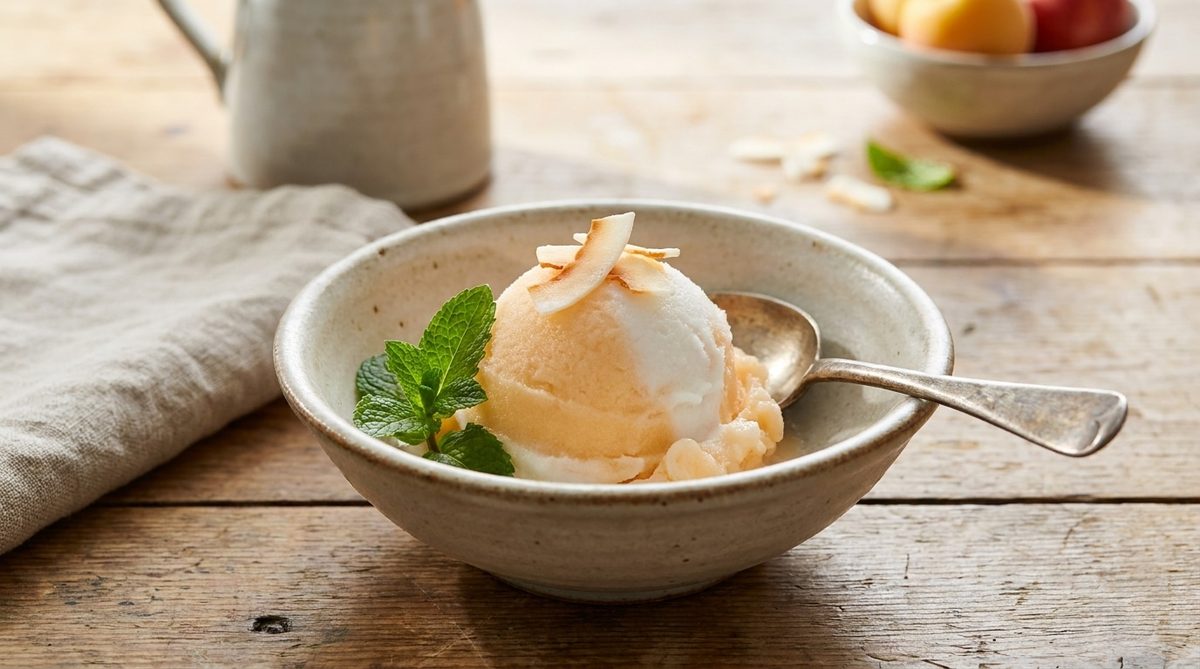
Scoop it into chilled bowls. Serve it immediately.
If you wait, the fat solidifies. The texture turns hard and icy. You lose the “sorbet” illusion. You get a block of frozen fruit.
Top with shaved coconut. Add crushed pistachios. Throw in some raspberries. The contrast in texture is nice. But the base stands alone.
This method works with any summer fruit. Strawberries? Yes. Peaches? Yes. Mango? Absolutely.
The principle is universal. Frozen solid fruit plus a fat source equals instant creaminess.
Summer is short. The heat is relentless. Don’t waste time waiting for a machine. Grab a blender. Grab some melon. Eat quickly while it is perfect.
What will you freeze next?