We just don’t see this world. We inhabit it. Spatial perception is a psychological mechanism that tells you where your body ends and the rest of reality begins. This is not a passive thing. Your brain is constantly calculating distance, depth and relative position to avoid hitting a door frame or dropping glass. Without these clues, movement is just a guess. Direction is also impossible.
The ancient Greeks did not have fMRI scans, but they were obsessed with the function of vision. They came up with a theory that sounds more like sci-fi than science: objects emit a thin, invisible “film” of themselves. This projectile reaches your eye and creates the image you see. It seems intuitive, but you’d be wrong. But it shows how far people have tried to interpret visual mechanisms.
Centuries of hard knowledge eventually replaced these myths with geometric reality. We perceive space in three dimensions. height. width. depth. These are not abstract concepts. They are perpendicular planes. vertical plane. horizontal plane. sagittal plane. They all meet at one point in the center of your field of vision. It’s your eye.
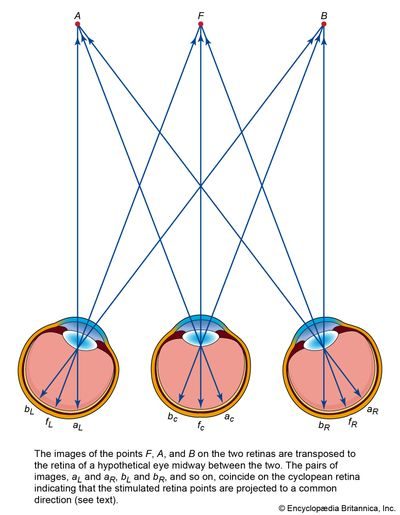
You have two eyes, but you cannot see two worlds. That would be confusing. Your brain combines the input from the two retinas and processes them into one coherent area. Psychologists call this the monocular state. It comes from the one-eyed giant of Greek mythology, and functionally it looks like you have an eye in the middle. This integration removes second-order redundancy and creates a unified map of object locations.
Three levels divide your environment into logical parts. A horizontal plane separates the top and bottom. A vertical plane separates the front and back. The sagittal plane controls left and right. This network is already built into your cognitions before you consciously pay attention to the object.
Depth perception mechanism in 3D space
It’s more than just navigating with a mental grid. Use depth cues. These are signals that the brain uses to calculate the distance of objects. Some clues are one-way. You only need one eye. Others are binoculars. Both eyes must work together.
Monocular cues include size, texture gradient, and linear perspective. The road narrows the farther you go. Objects closer to you appear larger. The further the distance, the more refined the structure. Binocular cues depend on binocular difference. The images shown on the left and right retina are slightly different. The brain measures this difference. Calculate the depth of the gap. This allows you to judge the distance of a ball thrown at your face with amazing accuracy.
The sagittal plane is especially important for lateral movements. It helps to understand if the car is coming from the left or the right. The vertical level indicates whether the branch is above your head or in your path. A horizontal plane grounds you. It tells you where the floor is.
This system is fast. Automatic. you don’t think about it. You just have to move. But it’s easy to break. Optical illusions exploit loopholes in this system. This tricks the brain into misinterpreting depth cues. The painting looks like a very deep cave. The corridor may appear longer than it actually is. These techniques reveal the basic mechanisms of spatial cognition.
Why can’t I see two pictures?
The world won’t survive if you cover one eye.


George Berkeley, an 18th-century Anglican bishop, faced a problem that continues to plague cognitive scientists today. He believed that the eye sees flat images. The image is two-dimensional. The retina receives a two-dimensional projection. So how do we perceive depth? Berkeley believed that we are born without this ability. He believed that depth perception was a logical consequence. We learn it through trial and error using visual and tactile senses.
Modern science has largely rejected his rigorous empiricism. We now know that perception is a messy mix. It has to do with innate wiring and acquired experiences. The difference is vague. But the core question remains. How does the brain convert flat information into a 3D world?
Perceptual learning research exploded in the late 19th century. The 20th century accelerated the pace even more. Today, many psychologists consider spatial cognition a separate field. It focuses on arranging objects in space. We explore depth, movement and color markers. It also solves weird problems like amodal perception. How do you know a cube has six sides when you can only see three sides at a time? Your brain fills in the missing information. It assumes the object exists behind the obstacle.
Survival logic of veridical perception
Spatial awareness is more than just aesthetics. It’s all about direction. We move through the environment to find food or avoid danger. But we can only do this if our perceptions correspond to physical reality.
This is a veridical perception. It is the direct observation of stimuli that actually exist. Without it we would be lost. We are unable to move in social spaces. We cannot escape predators.
Think of a tiger approaching. The image on the retina grows all the time. If you look at it purely optically, you can see that the tiger inflates like a balloon. But you don’t think so. You might think that the size of the tiger doesn’t change, but it just gets closer. This is the size constancy. Your brain stabilizes the world despite fluctuations in sensory input. The properties of the object (size, color, shape) remain constant, even if the lighting, distance and angle change.
Without this stability, the world would become an ever-changing chaotic storm. You cannot recognize your friend’s face from different angles. You couldn’t judge the height of the stairs. Perceptions of reality provide an anchor.
When reality is distorted
Not all spatial perceptions are real. Sometimes the brain can lie. In fact, it is simplified.
These errors are called nonveridical perception. They are not random failures. They follow a pattern. Experiments have shown that people tend to place objects near three basic spatial planes: horizontal, vertical, and sagittal. We often think things are closer to these dimensions than they actually are.
Why? Gravity plays a role. Gravity determines how visual data is interpreted.
This bias does not compromise our vision. It clarifies it. Processing all the sensory information with perfect precision can make the flood of information overwhelming. We would be paralyzed by detail. A certain selectivity is necessary for survival. The brain filters out the noise. It focuses on content related to your current goals and physiological state.
Multisensory spatial network
It is clear that spatial awareness depends on vision. However, this assumption breaks down upon closer inspection.
Visual space is only part of the equation. It is complemented by other senses. We use our hearing to measure distance. To understand our position, we use kinesthetics, i.e. the feeling of our body’s movement. Although our senses of smell and taste are subtle, they also have an impact. The vestibular system, i.e. the sense of balance, is essential for three-dimensional orientation.
No clue works in isolation. Experimental evidence confirms that these sensations combine. They merge into a unified perceptual experience. You don’t hear a sound and then guess by hearing the sound. You can hear it and know its distance. The brain combines auditory, visual and physical signals into one unified world map.
This integration is fast. It is often unconscious. You may not realize that you use your inner ear to determine the height of the stairs. But your brain does. Comparing visual depth cues and vestibular feedback.
The result is a stable, useful and almost accurate detection. This is not a perfect record of reality. This is a constructed model. A survival tool. As we’ve seen, sometimes you need to takes shortcuts. It fills the gap. It favors gravity. It ignores irrelevant data.
Navigate like this. You don’t see everything, but you see enough.
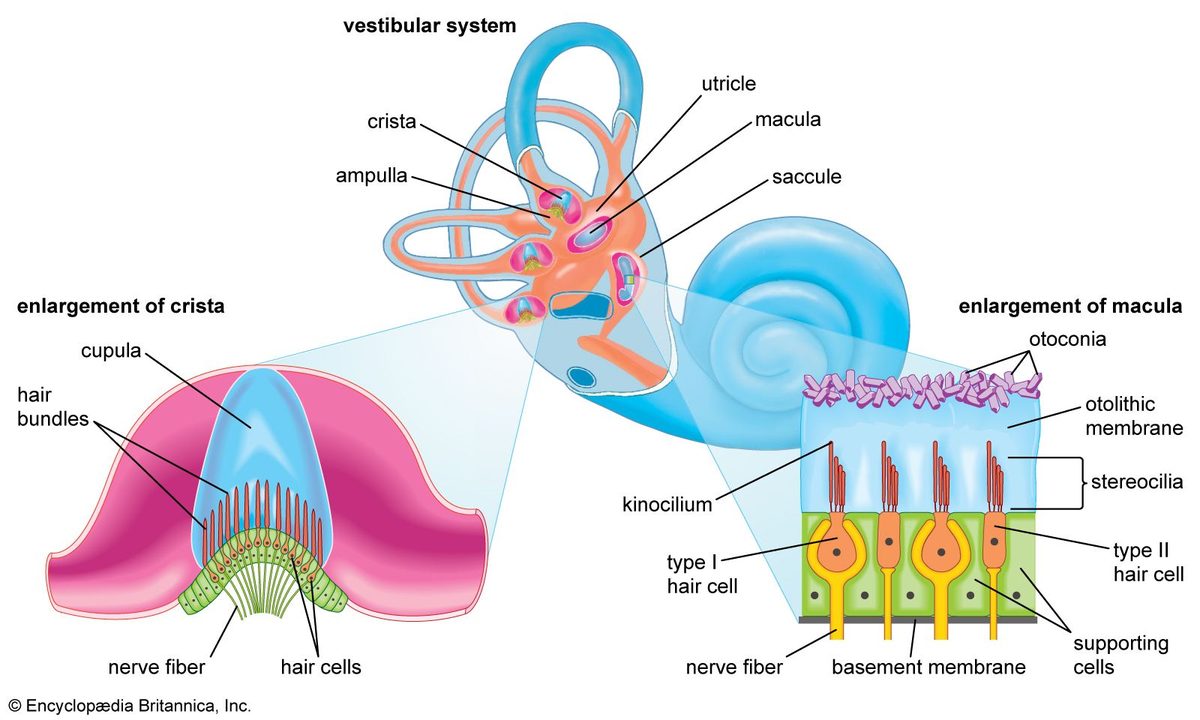

Vision dominates the human experience. We rely on vision to map the world, and our balance and vestibular senses take a back seat. Walking in complete darkness reveals how much your inner direction depends on these inner ear signals. Since it is a sense of distance, visual perception is dominant. It covers a wide area from the room you are in to the stars themselves.
Hearing and smell work even from a distance. However, their range is limited. Touch and taste are the closest. They require contact. You have to touch something to feel it. You have to taste something to know what it tastes like.
The Upside-Down World
The eye works like a camera. Think of the retina as a membrane. The lens acts like a glass element that focuses the light (see eye). Light hits the retina and physically projects an inverted image.
You won’t experience the world being turned upside down. The brain reverses it.
The mechanisms behind this perceptual reversal are still poorly understood. It can involve two steps. First, optical inversion occurs on the retina. The second is a neural change in which the visual tissues of the brain process nerve impulses.
Adapt to distortions
Humans are adaptable. You can learn to interpret new visual cues, even if they contradict everything you know. reversing spectacles experiment proves this. Subjects wore glasses that allowed them to turn the image from right to left or from top to bottom.
At first they were confused. Movement felt wrong with my movements. Objects seemed misplaced to be in the wrong place. However, after you’ve been wearing distorting lenses for a while, your brain gets used to them. People have learned to navigate correctly again. They adapt to the environment until the object looks normal again.
Remove the glasses and the process reverses in reverse order. The familiar world suddenly looks distorted. However, in a short time, the subject adapted again. The brain returns to familiar visual cues. The world returns to normal.
Depth and Distance Cues
How do you know how far something is? It is not just one sense. This is cooperation.
Sensory cues indicate the relative distance to the perceiver or other objects. Sight and hearing convey these cues. They can work independently. A consistent sense of distance is created with only one sense. However, in many cases we rely on intermodal perception. All your senses work together to create a reliable map of space.
Tactile and Kinesthetic Frames
For nearby objects, we depend on touch. The sense of touch works together with kinesthesia (the feeling of muscle movement of the surface of muscles and sensory organs). These sensations help distinguish your body from the rest of your environment.
Your body becomes your frame of reference. It is the standard against which you gauge distance. However, this standard is not static. Your perception about our bodies changes over time. Interestingly, our perception of our environment also changes our perception of our body.
Eye Muscle Effort
Seeing distant objects requires effort. Two muscle systems of the eye react.
The ciliary muscles are responsible for accommodation. Focus the lens to achieve near or far vision. The rectus muscles are responsible for convergence. They move the eyeball to align both eyes with the target.
Both systems contract as an object approaches them. The lens becomes more convex. The eyes turn inward and become closer. This experience of muscular effort gives clues to distance.
Image size and perception theory
In addition to muscle effort, the size of the retinal image is important. The larger the image on the retina, the closer the object is.
Some theorists believe it is innate. According to the nativistic theory, sensory cues activate inherited tendencies. You don’t need to learn to perceive size. Modern research focuses on physiological changes related to depth perception. Is depth perception completely innate or does learning matter? This is still a matter of debate.
Accommodation and convergence are reliable cues only within certain limits. Best for objects closer than 30 feet (9 meters). They need binocular vision. Both eyes must work together.
We automatically assume that we are looking at a 3D world. But this perception is a construct. It is based on certain biological tricks that the brain performs using information from the eyes and ears.
Binocular parallax
The most important clue about depth is the binocular disparity. The eyes are located far apart inside the skull. This physical separation means that each eye receives slightly different images of the same object. The brain combines these two retinal images into a three-dimensional experience.
This difference is called the binocular disparity. This depends on the angle at which the right and left eyes are looking at the object. Check the pressure gauge pointer. If you cover one eye and then the other, the reading will change slightly. That difference is parallax.
The greater the difference between the two images on the retina, the closer the object appears. This mechanism works best in the near space. As the object moves away, the angular difference between the two images on the retina decreases. The brain loses its acute depth cue.
Optical devices can take advantage of this over long distances. Stereoscopes and artillery rangefinders magnify the parallax difference of both eyes independently. These force the brain to process depth cues that may be too subtle to detect.
Movement and Perspective
Binocular parallax requires both eyes. What happens if you close one? You still perceive depth. This is where the parallax of visual movement comes into play.
When you move your head from side to side or back and forth, nearby objects move more on your retina than distant objects. A nearby tree blurs past quickly. A distant mountain barely moves. This cue is critical for monocular viewing.
In addition to movement and binocular input, it also relies on perspective projection. These cues work for one or both eyes. They help the brain integrate perceptions into a coherent whole, even if the science behind it is not yet fully understood. These cues often depend on learning and experience.
Linear perspective uses lines that converge to a point, like a railroad track disappearing into the horizon. Color perspective uses hue gradients. Aerial perspective makes distant objects appear blurry when looking at Earth from above.
Brightness also plays an important role. In the experimental setup, brighter objects appear closer. A white card on a dark background appears to float forward when illuminated by a bright light. The hue changes from bright red to deep red, and the perceived distance changes. The brain interprets light intensity as proximity.
The Auditory Edge
Sight is not the only sense that describes distance. Auditory signals provide important information.
Sound intensity matters. Loud sounds often feel closer. Pitch changes also indicate depth. Consider the Doppler effect. As the train approaches, the pitch of the horn increases. As it moves away, the pitch will decrease. The brain uses this frequency change to measure speed and direction.
There is also a time delay. You can see the lightning before you hear the thunder. You see a cannon fire before you hear the boom. The gap between sight and hearing tells us how far away the event is. The longer the delay, the greater the distance.
How our senses work together to map space
Human spatial awareness is not a single act. It relies heavily on the handshake between sight and touch. The first year of your life is about this partnership. Long before your baby’s vision is fully sharp, he’ll be exploring the world with his hands. At this stage, touch is the primary tool for understanding shape and distance. Other senses, such as hearing, also play a role, but are secondary in early perceptual learning.
Without sight and touch, it is difficult to navigate the detailed physical world. Even the visually impaired think that auditory cues are often not enough to build an accurate mental map of their surroundings. For this reason, sighted people naturally use a combination of visual and tactile memory to locate the source of a sound. This interaction can be subtle. Try turning a pointer at distant sounds. It is more accurate if the indicator lights up exactly when the noise occurs. One sense anchors the other. It shows you more clearly where things are.
This cross-modal transfer is not unique to humans. Young monkeys can be taught to distinguish shapes such as cubes and cones by touch alone. Feed them for the correct choice. Next, show them a picture of the same shape. You can often identify it visually without prior sight. The tactile learning transfers to the visual domain. This is a powerful example of how the brain integrates different types of information.
When sensory input is limited, Orientation suffers. Even if you’re in a familiar room, it feels strange when the lights are off. Visual cues give structure to everyday movements. When they disappear, we are lost. We rely on a rich environment to estimate depth correctly. Taking pictures of people at different distances in a cluttered environment gives a more accurate depth estimate than taking a picture of a isolated rods against a plain background. The brain needs context.
The Brain’s Trick for Stability
The brain does more than just store sensory information. It edits it. We sift through local stimuli and make adjustments to reflect what we believe to be true. This process creates constancy. You can experience a world that is constantly changing.
Object constancy is a key concept. Size constancy means that cars look the same regardless of whether they are parked next to each other or blocks away. You don’t perceive it shrinking as it drives off. Form constancy, the pencil looks like a cylinder, although when you look at the edge of the eraser, you only see a circle. Your brain fills in the blanks. Distorted retinal images are ignored.
Color constancy works the same way. The coal pieces stay black in bright sunlight and shade. The visual system compares an object to its surroundings to determine its true color. It adjusts for the lighting conditions. This “realistic” perception is not a passive recording but an active construction. The physical world that you perceive is real, not what is shown on your retina at that moment.
How do people act when their senses stop working?
Animals have different pathfinding tools. Ants and many mammals rely heavily on scent trails to indicate trails of different lengths. Some insect larvae follow the tiny threads they spin even more closely as they develop. For others, the sky is a map. Migratory birds use the stars to navigate in twilight and darkness, and many species follow the sun. Gravity, temperature changes and clear visual landmarks such as rivers also play a role.
However, human navigation is fragile. The rise of aviation and space travel requires us to examine exactly how we relate to space. We rely on the synergy of vision and balance to understand the vertical and horizontal planes. You lose your vision and your system breaks down.
For this reason, pilots can become dangerously disoriented. The inner ear (vestibular system) senses gravity. However, when an airplane moves in the air, it experiences centrifugal and centripetal forces that mimic gravity. These false signals trick the brain. When the wings are lowered, the pilot may feel as if they are level. Without a visual reference to the ground, your balance is lying to you. That is why optical displays are used in high-flying aircraft to simulate the horizon. It is a digital crutch for biological systems that were not designed for flying.
Testing the limits of human perception
Space flights involve greater risks. In weightlessness, the vestibular system loses a large anchor point. To prepare for this, research facilities used by the US Navy built giant, slowly rotating cylindrical chambers. These simulate the disorienting effect of space. Subjects stay inside for several days. The goal is to predict how short- and long-term weightlessness affects human perception. It’s a high-stakes experiment in sensory deprivation and confusion.
Why protect personal boundaries?
The need to define space isn’t just about navigation. It’s social. Many animals use burrows or roosts and fiercely defend their territories. This can be seen in breeding birds and seals. When the intruder crosses the invisible perimeter, the defense ceases. This behavior displays an accurate mental map of one’s personal space.
Primates, including humans, extend this logic to social groups. Based on this sense of ancient territory, we maintain a certain distance from others. Modern architecture reflects this. Apartment buildings and residential buildings often mimic the way groups of birds and small primates divide the land into individual households. Geographical distance is also used in urban planning to separate different social and ethnic groups. Robert Sommer’s Personal Space (1969) is famous for categorizing these spaces and patterns of social interaction. This remains an important study of how we organize our lives around invisible boundaries.