You can’t out-eat your biology.
Well, you can’t trick it.
Intermittent fasting and grazing all day get sold as metabolism boosters.
They don’t.
Your metabolic rate isn’t a faucet you turn wider with meal timing. It’s fixed, mostly.
The Myths About Burning Calories
Metabolism is the boring machinery. Breathing. Thinking. Keeping your heart beating. As you age the machine slows. You burn fewer calories just existing.
People hate this. So they change eating habits.
There is a slight spike in calorie burn when you digest. It’s called the thermic effect of food. Tiny spike.
The logic follows two paths.
Path one: Eat small. Often. Keep the fire burning.
Path two: Fast. Restrict hours. Catch that morning thermic effect wave.
Here’s the problem.
The wave isn’t there.
No research supports the idea that either pattern makes you burn significantly more calories long-term. Stop believing it.
What actually moves the needle?
- Genetics (bad luck or good luck)
- Body size and composition
- Physical activity
- Age and sex
- Diet quality
- Insulin resistance
Meal timing doesn’t touch these big drivers. It touches something softer though.
Your mood.
Your hunger.
Your choices.
Why Intermittent Fasting Works
It doesn’t speed up your engine. But it might make the car lighter.
IF helps weight loss.
Why?
Two reasons. One is simple. People eat fewer calories. They skip breakfast or dinner. The math works out.
Two is trickier. It aligns with circadian rhythms. Your body clock likes regularity.
“The benefits of intermittent fasting are often similar to traditional lower-calorie diets.”
Is it easier than counting calories?
Maybe.
Some people hate tracking grams of protein. They prefer rules about time instead of quantity.
Less thinking.
The 16:8 method is popular. Eat for 8 hours. Fast for 16.
Or try alternate day fasting. Eat normal. Starve the next day. Then repeat.
It feels extreme.
It isn’t for everyone. Headaches hit. Energy drops. Hunger screams.
If you’re prone to eating disorders this is dangerous ground. Tread carefully.
The Case for Snacking
Now flip the script.
Eat five times a day. Six. Ten.
Small meals. Under 500 calories each. No fasting windows.
A 2023 study with 500-plus people looked at this.
They found smaller, frequent meals linked to lower weight.
Wait.
The study also said limiting large meals was more effective than time-restricted fasting for weight loss.
Confusing? Yes.
Here’s the theory.
Grazing keeps hunger low.
No hunger means no binge at 6 PM.
Athletes love this. Their bodies need constant fuel.
But for average dieters the science is muddy.
Other studies show no link between meal frequency and BMI. Some even show that eating less frequently leads to weight loss.
Contradictory data. Frustrating.
The risk is clear.
Turn “structured small meals” into “mindless grazing.”
You end up eating 2,000 calories of snacks instead of two nutritious dinners.
Quality matters. If you’re snacking all day it better not be just chips.
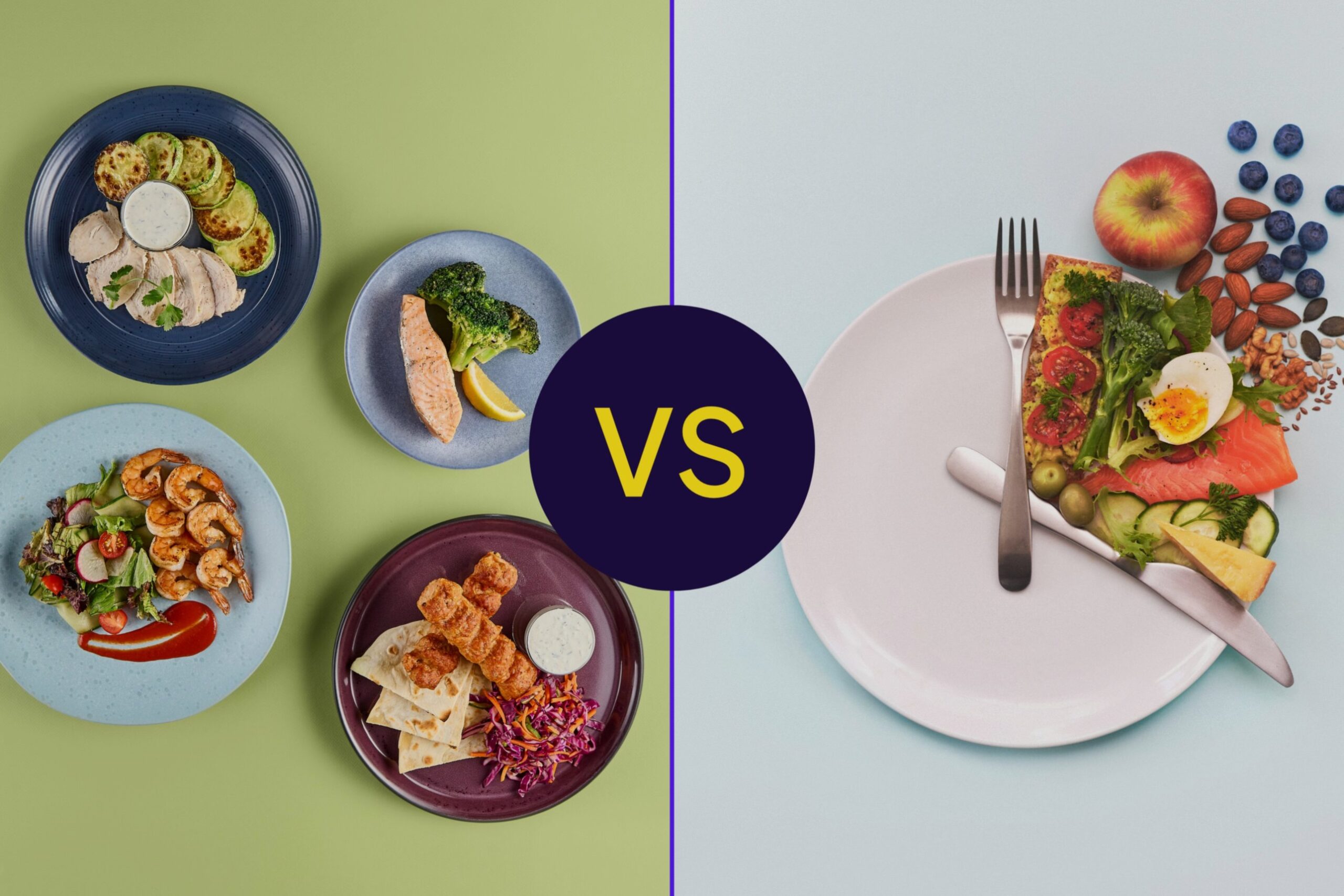
Pick Your Poison
So which is better?
There’s no winner.
Intermittent fasting works well for people who hate calorie counting. They find restriction too mental. IF is structural. Simple rules.
Small, frequent meals work better for those who starve by afternoon.
If you get hangry you can’t fast.
If you overeat when hungry graze.
The result?
Same weight loss.
Same health markers.
As long as the total calories are controlled and the food is good.
It doesn’t matter when.
It matters what. And how much.
So what will you choose tomorrow?
A big breakfast? A skipped dinner?
Does it even change anything?
Maybe it just changes how you feel while doing it.
And maybe that feeling is enough.