


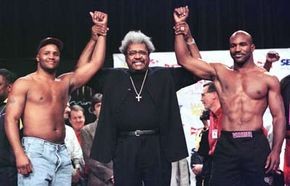
The Sporting News named Don King the 49th most powerful person in sports for the 20th century back in 1999. That’s not a ranking for a fighter. Or a coach. It’s for the guy who books the fights. The article called him the dominant promoter of the last two decades. He used bluster and swagger. Plus an acute business sense. He built an empire out of noise.
That list placement tells you everything about the role. Promoters hold the leash. The gap between a skilled unknown and Muhammad Ali? Often just a better promoter.
What Is the Difference Between a Boxing Manager and a Promoter?
People mix them up. They shouldn’t.
A manager looks out for the boxer. A promoter looks out for the promoter. Sometimes those goals line up. Often they don’t. This is why so many champions end up broke. The less the fighter makes, the more the promoter pockets. It’s the same broken model that pits musicians against record labels.
The promoter assumes all the financial risk. They pay for everything. Or they find investors to pay for everything. We’re talking about every single detail. From the plastic beer cups to the ring canvas. The round girl. The referee. The ticket sales. The advertising. The licenses. Even making sure the weigh-in scales are calibrated correctly.
A big-time promoter outsources the headache. A small-time promoter stands in line at the state boxing commission. They measure the ring dimensions themselves to ensure it’s up to code. But the liability is always theirs. If something goes wrong? If the ambulance isn’t waiting outside with exactly two qualified paramedics? The promoter is responsible.
Why Do Boxers End Up Broke While Promoters Get Rich?
Because the promoter expects a huge chunk of the profit.
The purse is a cost item. Just like the food vendors or the medical staff. When the promoter and the manager negotiate the purse, they are fighting over that cost. A larger purse means smaller profit for the promoter. So the promoter wants to minimize it. Always.
An unscrupulous promoter will prey on a young, hungry fighter. The kid just wants to prove himself. He doesn’t know his worth. The promoter knows. The promoter has no duty to be fair. The manager’s job is to ensure the boxer gets a fair slice of the pie.
How Promoters and Boxers Actually Align
There is one area where interests match. Publicity.
A well-publicized fight benefits everyone. The promoter gets profit. The boxer gets status. The biggest skill for a promoter isn’t logistics. It’s marketing. Knowing how to sell the fight to a broad demographic. Not just boxing fans. Everyone.
In the modern era, that means mastering the pay-per-view system. Getting people to pay a premium to watch on their home TV. For the promoter, this means revenue. For the skilled fighter, it means moving from “potential marquee” to actual marquee status. Marquee boxers negotiate huge purses.
Success in the ring isn’t enough. You need financial success too. That requires a skilled promoter. And a loyal, dedicated manager to handle the negotiations. Boxers who last long-term surround themselves with people who know the business. Not just the art.
The gritty reality of boxing promotion costs
So you think you can throw a fight for cheap? Think again. The cost to put on a boxing match isn’t just about the fighters’ purses. It’s everything. And I mean everything.
We’re talking the ring canvas. The chairs in each corner. The plastic cups for the beer. Even the girl holding up the round cards. You have to pay the referee. The judges. The security. You need licenses from state commissions. You need advertising that actually reaches people. And don’t forget the scales at weigh-in. They have to be calibrated perfectly. One glitch and the whole event gets paused.
There is no single price tag. A local gym bout costs peanuts compared to a Las Vegas main event. But the margin for error is zero in both cases.
How much do promoters actually make?
Let’s talk money. If you’re wondering how much a boxing promoter earns, the numbers are decent but volatile.
According to Comparably, the median salary for boxing promoters in the U.S. sits around $93,828. But that’s a median. It hides the outliers. The guys at the top? They’re making millions. The guys at the bottom? They’re working for exposure and hoping for a break.
It’s a high-risk, high-reward game. You bet your house on a fight. If it flops, you’re underwater. If it hits, you’re set for a year.
The Don King legacy: Genius or grifter?
You can’t talk about promoters without talking about Don King.
He is the most famous name in the business. He promoted Muhammad Ali. Mike Tyson. Larry Holmes. He made fights into global events. He had a knack for selling drama.
But here’s the rub. King is controversial. Most of the boxers he represented have sued him. He’s been tried for murder twice. He’s been accused of stealing charitable donations.
The line between brilliant marketer and ruthless operator is thin in boxing. King walked it like a tightrope walker with no net.
Skills that matter more than charisma
Everyone thinks promoters are just loud guys in suits. Wrong.
The biggest skill is marketing. You have to sell a fight to the broadest possible demographic. You need to get butts in seats. You need to get pay-per-view buys.
It’s not enough to have two good fighters. You have to create a story. A rivalry. A narrative. If people don’t care, you don’t get paid. Simple as that.
Where to learn the ropes
If you’re serious about this, you need to understand the legal side. The Florida State Boxing Commission has detailed information for promoters. It’s dry reading, but it’s necessary.
You can also look into how pay-per-view works. Jeff Fried broke down the ABCs of it years ago. Still relevant today. And if you want to see how fighters protect themselves outside the ring, check out Jim Thomas’s work on the business side.
There’s even an MSNBC piece from 2006 that says you can become a boxing promoter for just $1,995. I’d double-check that claim. Or triple-check it. The business has changed. The costs have gone up. The stakes are higher.
The links below go deeper. Use them.
- How Boxing Works
- How Record Labels Work
- How Pro Wrestling Works


