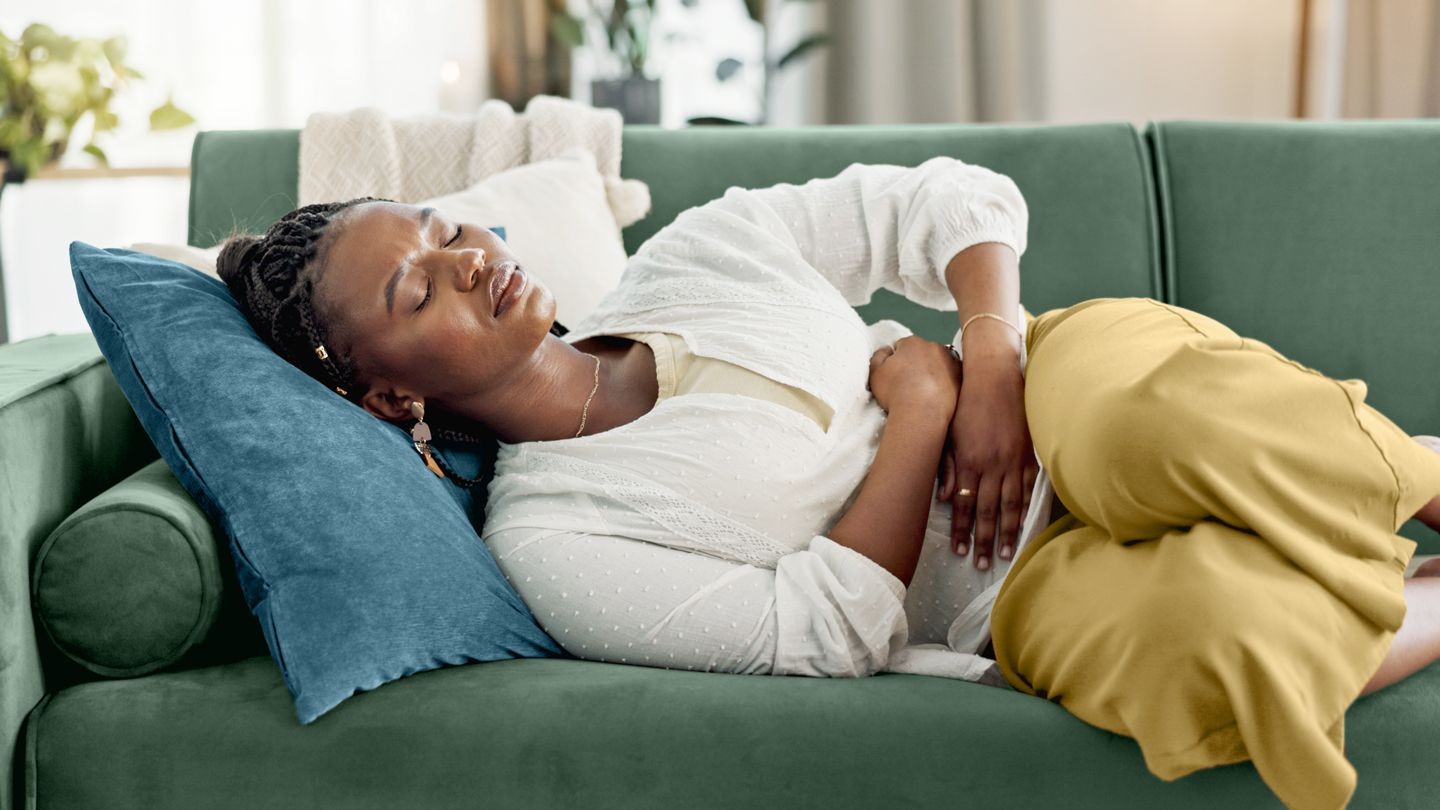
Mild cramping? Bloating? Yeah. That’s expected.
Severe, crippling pain that drops you to the floor? Not so much.
While a dull ache for a couple of days is normal physiology, significant pain paired with heavy bleeding often signals a medical issue hiding underneath the surface.
Usually, primary dysmenorrhea starts within 24 hours of bleeding and lasts a few days. It feels like a constant, heavy throb in the uterus, sometimes shooting into the lower back or thighs.
Sometimes you feel dizzy. Maybe nauseous. Or you just need to sit down.
Here’s the mechanic behind the basic version. Prostaglandins. Chemicals that tell your uterus to squeeze. Too many prostaglandins mean extra hard contractions. The uterus squeezes so hard it cuts off its own oxygen supply briefly. The muscle panics. You cramp.
But sometimes it isn’t just the chemistry. It’s structure. Or disease. Or both.
“If your periods are causing significant pain, rule out underlying issues.”
Here is what might actually be happening.
Endometriosis: The Stealth Disease
This is big. Affecting 200 million people.
Tissue that looks like the uterine lining grows… outside the uterus. On the ovaries. Bladder. Pelvic floor. In bad cases? Bowels. Lungs. The diaphragm.
Nobody knows exactly why it happens. Maybe immune system errors. Maybe blood flowing backward (retrograde menstruation ). Maybe your DNA—if a relative has it, your risk triples or septuples.
Left alone? Adhesions form. Inflammation sticks around. Chocolate cysts fill with blood. Internal bleeding occurs. The pain doesn’t just show up during your period. It haunts your back, your nerves, your bowels. It masquerades as Irritable Bowel Syndrome. It masquerades as appendicitis.
And diagnosis? It’s a slog. Often a decade-long wait.
Why? Because you can’t scan it easily. You need a laparoscopy. Surgery. To cut and check tissue in a lab. Doctors dismiss it. “Just a period,” they say. Wrong. It’s not just a period.
Adenomyosis: The Inner Intruder
Think of this as endometriosis’s sibling.
Instead of roaming free outside, endometrial tissue digs into the muscular wall of the uterus itself. It burrows.
During your cycle, that embedded tissue bleeds too. But it has nowhere to go. It gets trapped. Pressure builds. The uterus swells. The result? Stabbing cramps. Heavy pressure. Pain during sex.
Good news. Unlike endometriosis, this one has a cure. A hysterectomy removes it.
Don’t want that surgery? You’re not stuck with just one path. Hormonal therapies like a levonorgestrel-IUD can manage the chaos. Anti-inflammatories help.
It used to be seen only in middle-aged women who had kids. Now? We see it in younger people too. The narrative is shifting.
Uterine Fibroids: Common But Nasty
40 to 80% of people with a uterus get them. Most don’t feel a thing.
Some people? Not so lucky.
Lauren Streicher, an OB-GYN professor, puts it plainly:
“Uterine fibroids can turn menses into a nightmare by increasing bleeding and pain.”
Why the pain? The uterus has to work harder to push out the massive clots that accompany heavy flow. It contracts harder. You feel it more.
Are they cancer? Rarely. Almost never. That part is okay.
When do they appear? Usually 30s or 40s. And they don’t hit everyone evenly. Black women get them earlier. They grow faster. The disparity is real and tied to systemic inequities.
The Copper IUD: A Specific Culprit
ParaGard is reversible. Non-hormonal. Lasts ten years. It kills sperm. It stops implantation.
It can also make periods heavier. More painful. Especially in those first few cycles after insertion.
But listen close.
If you’ve had the device for years and suddenly start having severe pain? Check something else. The IUD is likely not the enemy then.
Pelvic Inflammatory Disease (PID): The Silent Scare
This is an infection. Of the reproductive organs.
Most often? It starts with untreated sexually transmitted infections.
The bacteria travel. They inflame. They scar. They create adhesions in the pelvic bowl. When your hormones fluctuate during your period, those scars tighten. Bleeding increases. Pain spikes.
Shilpi Agarwal, a physician, warns:
“Scar tissue and adhesions can increase inflammation and pain.”
Antibiotics fix the active infection. They do not fix the scar. Prevention matters. Get tested. Practice safe sex. Early catch saves the structural integrity of your tubes. Late catch? Risk of ectopic pregnancy rises. Risk of infertility rises.
Uterine Defects: Born With a Twist
Some bodies form differently.
During fetal development, Müllerian ducts build the reproductive tract. Sometimes, the blueprint gets mixed up.
- Bicornuate uterus : Heart-shaped. Two cavities.
- Septate uterus : Divided by a band of fibrous tissue.
- Unicornuate uterus : Only one side develops.
- Uterus didelphys : Two uteri. Two cervices. One shared canal divided by a septum.
The pain here comes from blockage. Menstrual blood can’t escape smoothly. It gets trapped behind membranes or septa. Cramping intensifies as the pressure mounts.
So.
You’re in pain.
It’s easy to think it’s just part of the deal. The “normal” suffering everyone expects you to shrug off.
But the body talks. Loudly. If it screams during your cycle, don’t whisper back.
Find out why.