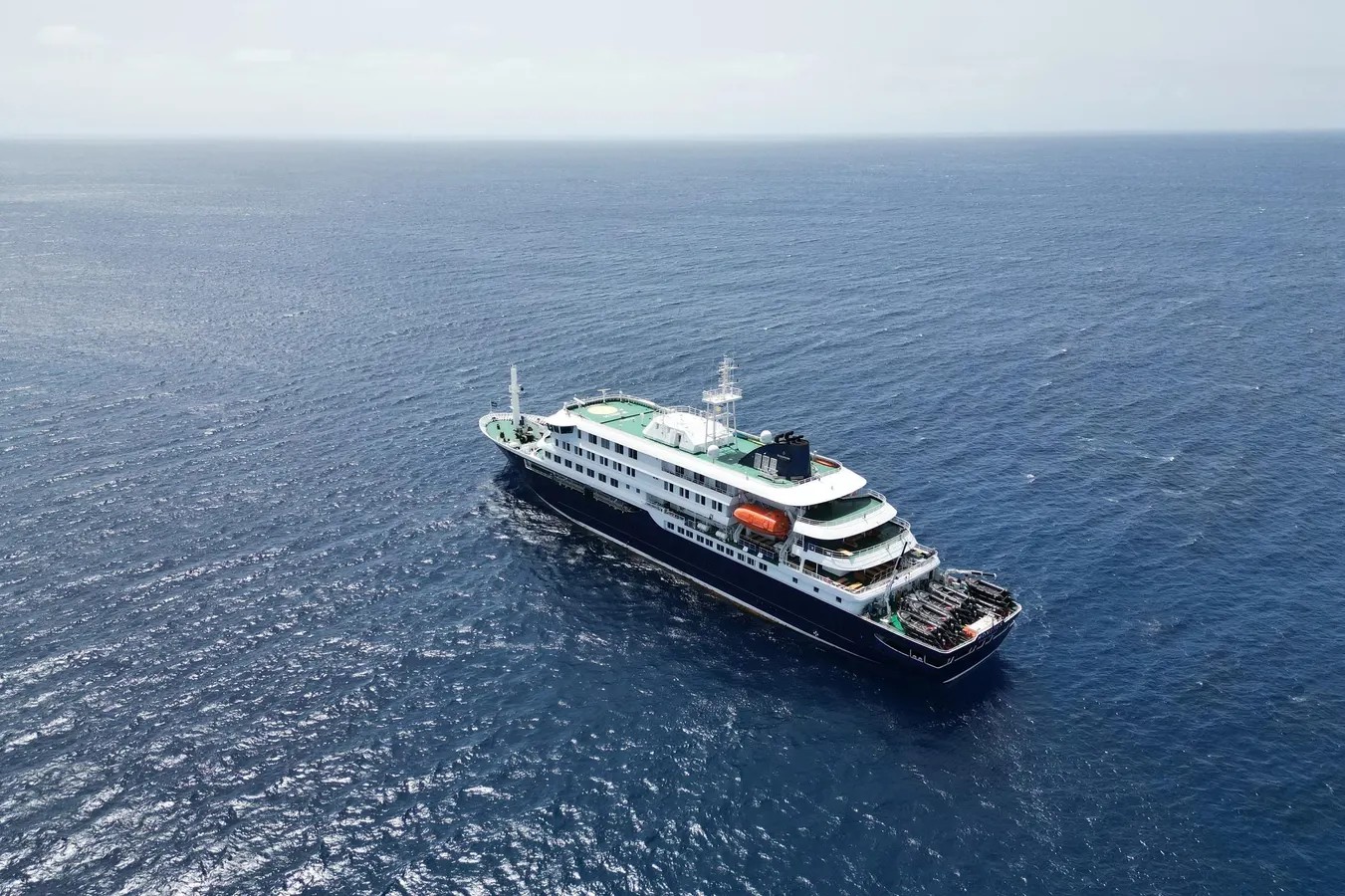
Three passengers have died and three others remain critically ill aboard the MV Hondius, a polar expedition vessel currently anchored off the coast of Cape Verde. The World Health Organization (WHO) has confirmed one case of hantavirus through laboratory testing, with five additional suspected infections.
This incident marks a significant anomaly in public health records: there are no known precedents for a hantavirus outbreak on a cruise ship.
“I don’t know of any other cases reported on a cruise ship,” Emily Abdoler, an infectious disease physician at the University of Michigan, told the New York Times.
The Hondius departed Ushuaia, Argentina, on March 20, carrying approximately 150 passengers. Its ambitious itinerary included stops in Antarctica, the Falkland Islands, South Georgia, and various remote South Atlantic islands before heading toward Cape Verde.
The central mystery for epidemiologists is not merely the severity of the outbreak, but the vector of transmission. Hantavirus is typically contracted by inhaling dust contaminated with rodent urine or droppings. How did six individuals on a moving vessel contract a disease that usually requires direct environmental exposure to infected rodents?
Understanding the Threat: Old World vs. New World
To understand the stakes, it is necessary to distinguish between the two primary categories of hantavirus, as they present different risks and transmission patterns.
- Old World Hantaviruses: Found primarily in Europe and Asia, these strains cause hemorrhagic fever with renal syndrome (HFRS), a kidney disease. While serious, the fatality rate ranges from 1% to 15%. Approximately 150,000 to 200,000 cases occur annually, largely in China.
- New World Hantaviruses: Found in the Americas, these strains cause hantavirus cardiopulmonary syndrome (HCPS), which attacks the lungs and heart. This form is rarer but significantly deadlier, with a case fatality rate of 35% to 40%. Since surveillance began in 1993, the U.S. Centers for Disease Control and Prevention (CDC) has recorded only about 890 cases.
The Hondius departed from Patagonia, the natural habitat of the Andes virus, a specific New World hantavirus. The Andes virus is unique because it is the only hantavirus strain documented to spread from person to person.
Three Plausible Scenarios for Transmission
Epidemiologists are investigating three primary theories to explain how the virus entered the ship and spread among passengers. Each scenario carries distinct implications for global travel safety.
1. Exposure on Shore
Passengers on expedition cruises frequently go ashore in remote, wild environments. However, geographical constraints narrow the possibilities significantly:
- Antarctica: Has no native rodent population.
- South Georgia: Completed a massive rodent eradication program around 2015, clearing rats and mice from over 100,000 hectares. The island now uses biosecurity dogs to inspect every arriving vessel.
- Falkland Islands: While rodents are present, hantavirus has not been documented there.
- Ushuaia, Argentina: This leaves the departure port as the most likely site of initial environmental exposure. Passengers likely spent time in Ushuaia before embarkation. The incubation period for hantavirus (typically two to four weeks) aligns with this timeline.
2. Infestation on Board
Ships have historically been vectors for rod-borne diseases. Seoul hantavirus, an Old World strain, is known to spread globally via maritime shipping routes due to infected rats living on vessels. If the Hondius harbored infected rodents, passengers could have inhaled aerosolized droppings in confined below-deck spaces. Surveillance programs in ports across China and West Africa exist specifically to mitigate this risk.
3. Person-to-Person Transmission
This is the most consequential scenario. If the outbreak is caused by the Andes virus, it suggests human-to-human transmission occurred.
Precedent exists for this in rural Patagonia. In 2018–2019, a single rodent-to-human infection in Epuyen, Argentina, sparked a chain reaction resulting in 34 confirmed cases and 11 deaths. The outbreak was driven by “super-spreaders” at crowded social gatherings. Before intervention, the reproductive number (R0) was 2.12, meaning each infected person infected more than two others on average.
A cruise ship is, in epidemiological terms, a prolonged, crowded social gathering—creating ideal conditions for such transmission if the virus is capable of it.
The Uncertainty of the Strain
The confirmed case involves a British national currently in intensive care in Johannesburg. While the patient tested positive for hantavirus, the specific strain has not yet been publicly identified. The identity of the virus will dictate the next steps in the global response:
- If it is Andes Virus: This would represent a novel public health challenge: the virus jumping from rural Patagonian communities into an international travel context. With 150 passengers from multiple countries now dispersing globally, the risk of secondary outbreaks increases.
- If it is Seoul Virus: The calculus changes. Seoul virus does not spread between humans and has a lower fatality rate. However, it would raise urgent questions about rodent control protocols on expedition vessels operating in remote waters.
Conclusion
The WHO is coordinating a multi-country response as the Hondius remains off Cape Verde, with two symptomatic passengers still awaiting medical evacuation. While six cases in a single cluster are statistically significant, the answer to how they contracted the virus will determine the scope of future containment efforts. Whether this is an isolated incident of environmental exposure or the beginning of a new era of travel-related hantavirus transmission remains to be seen.