


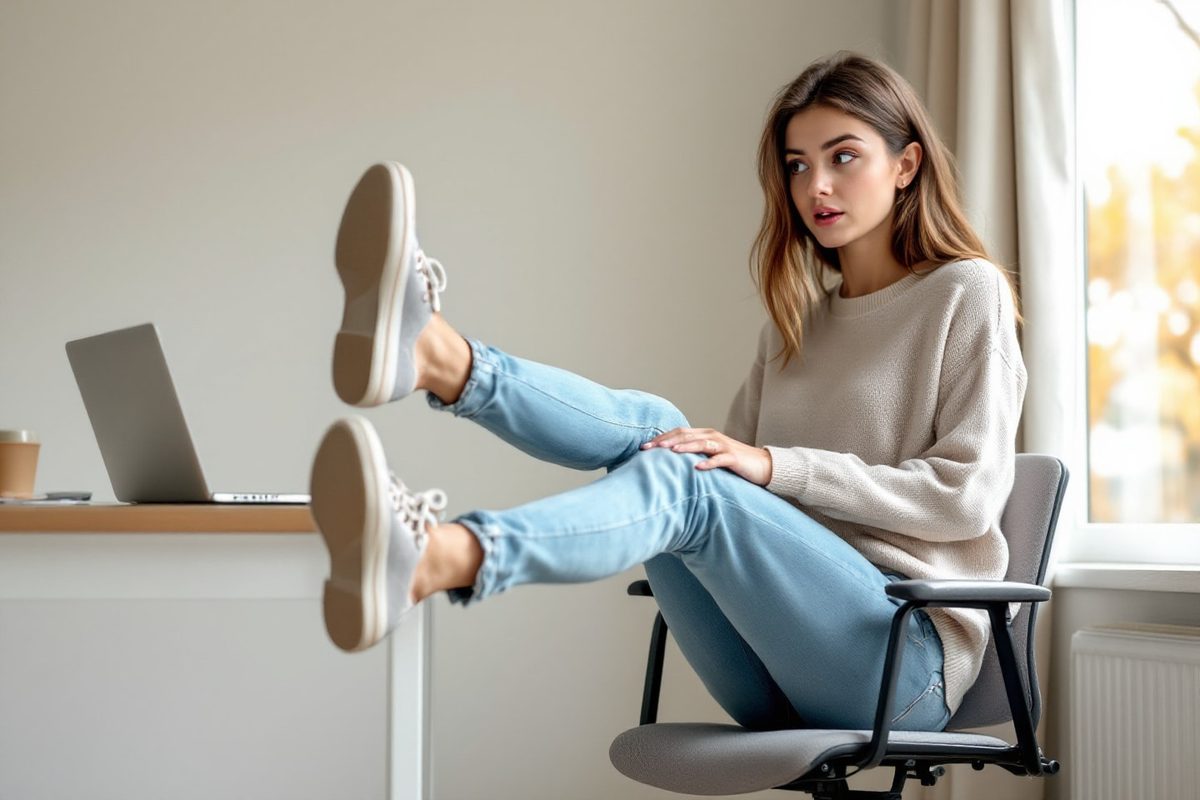
Who hasn’t caught their own foot tapping under a conference table? Or noticed that rhythmic thumping against the floor while watching TV? It’s autumn. The light is fading, the school year is in full swing, and that elusive little reflex is back with a vengeance. Is it just a bad habit? A nervous tic? Or is it the so-called “restless leg syndrome” that gets mocked at family dinners?
Maybe this unconscious signal isn’t a flaw. Maybe it’s your body screaming for you to listen, to pause, and to breathe.
The Anatomy of an Involuntary Kick
Why the leg moves when you sit still
That involuntary jerk isn’t random noise. When you feel your leg bouncing without your consent, it’s your physiology pulling the alarm. Sitting for hours slows circulation. Your nervous system gets impatient. Your muscles start begging for oxygen.
Your body acts before your brain even registers the discomfort. The leg moves solo to keep the minimum level of function alive. It’s a survival mechanism disguised as a quirk.
What this gesture reveals about your nervous state
This reflex is an unconscious strategy to dump internal tension. When your mind is racing through tasks or the afternoon drags on at the desk, shaking your leg releases excess nervous energy. It is, above all, a sign of unmet need. Your organism seeks equilibrium. You want to move. You want to stretch. But your environment forces you into sedentary stillness.
We’re talking about a natural, universal gesture. It’s your body saying “stop” when fatigue, anxiety, or boredom show their noses.
How to Read These Signals and Soothe Your Body
Steps to react to the first signs
Don’t feel guilty when the leg starts to jig. Don’t fight it. Treat this gesture as a benevolent reminder. To respond correctly, consider these steps:
- Identify the context: Is it stress? Boredom? Accumulated fatigue?
- Take a deep breath: Calm the nervous system immediately.
- Take a short break: Stand up. Change posture. Even for a minute.
- Self-massage: Rub your calf or thigh quickly. Restart circulation. Undo the tension.
Easy exercises for the office or home
You don’t need a yoga mat or flashy sneakers to counter this tic. Here is a small, effective routine. Practice it when the first cramps hit. Do it without disturbing anyone.
- Discreet foot flexions: 5 to 10 movements per leg.
- Seated knee lifts: Raise one knee, hold for two seconds, release. Repeat eight times per leg.
- Ankle circles: Under the desk. Ten rotations in each direction.
- Short walks: Around the office or down the hall. One to two minutes every hour.
| Symptom | Immediate Tip | Perceived Effect |
|---|---|---|
| Agitated leg, impatience | Ankle flexion, deep breathing | Nerve soothing, better circulation |
| Mental fatigue, lack of focus | Brisk walk or standing stretch | Sharper mind, energy boost |
| Occasional cramps, tingling | Self-massage and lower leg stretches | Relaxed muscles, comfort |
Advice from the Coach: Turning Tic into Wellness
Tips to release energy without disturbing others
You can channel this need for movement without becoming the star of the department or the annoying neighbor on the train. Here are some discreet and effective tricks.
- Sit on the edge of the seat: Allow your legs to extend and change angles more freely.
- Place heels on the floor: Contract and release your toes. Stimulate circulation without abrupt movements.
- Propose a collective break: If the context allows, suggest a short pause to colleagues. Normalize the movement. Create a beneficial ritual for everyone.
A variant to channel stress and boost concentration
Don’t let the agitation settle in for the long haul. Make a habit of responding to these small signals. Every time your leg bounces, grant yourself a voluntary micro-pause. A few shoulder rolls. A few steps in the hallway. A wide breath.
The cumulative effect of these short interruptions is proven. You will be more focused. Less tense. Your energy will be distributed better throughout the day. It’s a simple, almost instinctive gesture. But turning it into a habit is how you give yourself the chance to listen better and act for your well-being. Do it before fatigue or chronic anxiety takes over.
This isn’t just an embarrassing tic. The leg that bounces invites you to respect your limits. To circulate energy. To prevent nerve fatigue. This gesture deserves to be understood as a true opportunity. The chance to allow yourself to move. To rest. To recharge in the daily whirlwind. And if, this season, we finally took the time to pay attention?


