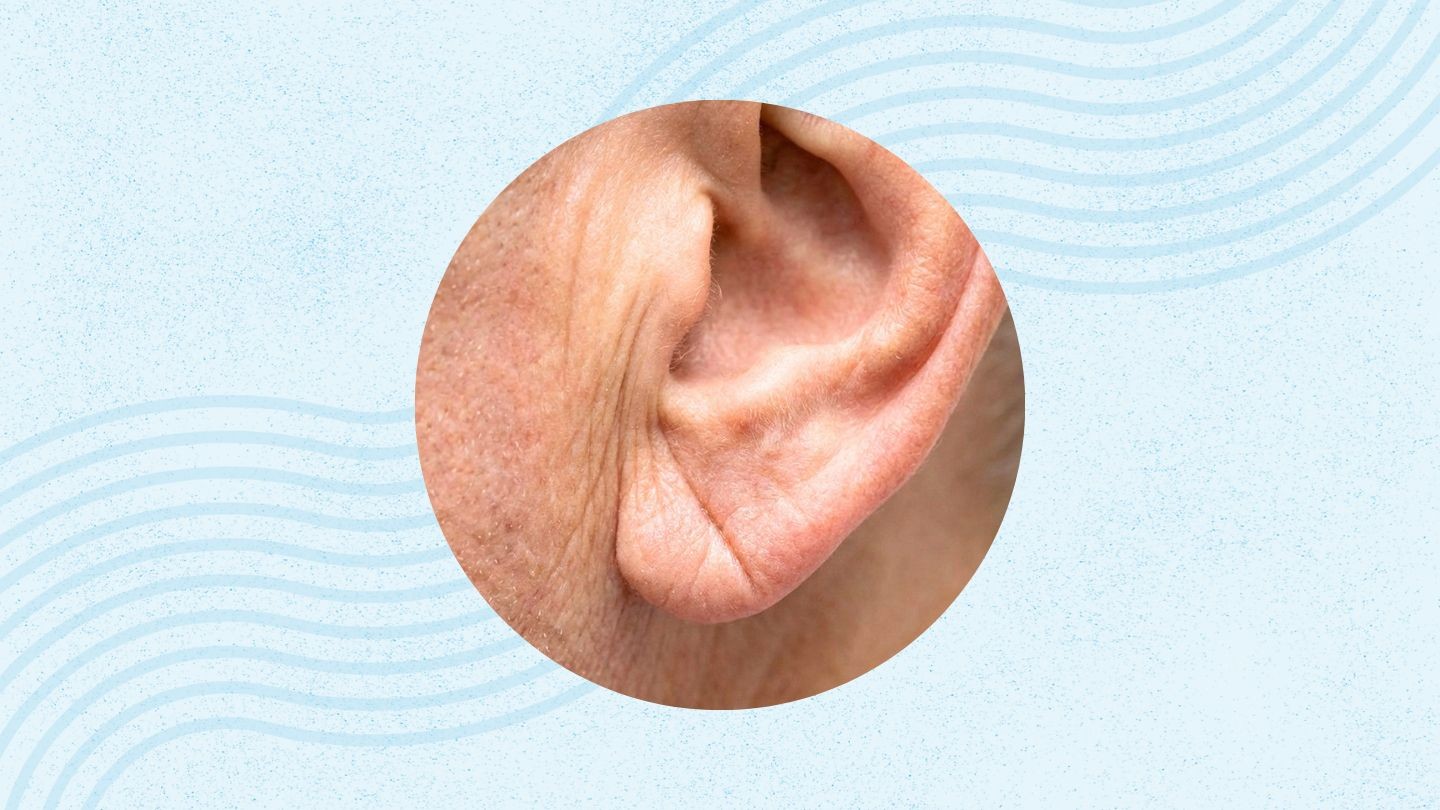
If you notice a diagonal crease running across your earlobe, you might wonder if it is merely a sign of aging or something more significant. In the medical community, this specific wrinkle is known as Frank’s sign, and it has long been studied as a potential indicator of cardiovascular issues.
What is Frank’s Sign?
Named after Dr. Sanders T. Frank, who first identified the phenomenon in 1973, Frank’s sign is a diagonal crease or wrinkle that typically cuts across the earlobe at approximately a 45-degree angle.
Key characteristics include:
– It can appear on a single ear or both.
– The depth and visibility can vary from a faint line to a deep, pronounced fold.
– It is often observed in patients experiencing angina (chest pain caused by reduced blood flow to the heart).
The Biological Link: Why the Ear Matters
While doctors do not use an earlobe crease to officially diagnose heart disease, researchers are investigating why a skin feature might correlate with internal vascular health.
The leading theory suggests that the earlobe acts as a “window” into your circulatory system. The earlobe relies on a network of tiny blood vessels and elastic fibers to maintain its structure. When the body experiences atherosclerosis —the buildup of plaque that narrows and stiffens arteries—the resulting inflammation and reduced blood flow may affect these small vessels in the ear.
“It is possible that a mild lack of blood flow in that area suggests that there are other parts of the body—mainly, the heart—that also have similar lack of blood flow,” explains Dr. John D. Bisognano, a cardiologist at the University of Michigan.
Clinical Reality vs. Medical Theory
It is important to distinguish between a correlation and a diagnosis. While some studies suggest a strong link—noting that roughly 78% of people with heart disease also exhibit Frank’s sign—medical experts urge caution.
The Limitations of the Sign
- Not a Diagnostic Tool: Doctors do not use Frank’s sign to confirm heart disease.
- Weak Predictive Power: Compared to traditional metrics like blood pressure, cholesterol levels, and blood sugar, the earlobe crease is a much less reliable predictor of health.
- Scientific Debate: There is ongoing debate among specialists regarding how strongly the sign is actually associated with premature atherosclerosis.
What Should You Do?
If you spot a crease on your earlobe, do not panic. An earlobe wrinkle is not a medical emergency, nor is it a definitive sign of impending heart problems.
However, it can serve as a helpful prompt for self-awareness. If you have the sign, it is a good time to:
1. Review your primary risk factors: Focus on managing blood pressure, cholesterol, and weight.
2. Consult your physician: Mention the crease during your next check-up, especially if you have other symptoms or known risk factors.
3. Maintain healthy habits: Regular exercise, a balanced diet, and routine screenings remain the most effective ways to protect your heart.
Conclusion
While Frank’s sign may offer a subtle clue regarding vascular health, it is not a substitute for clinical testing. View the earlobe crease as a minor piece of a much larger health puzzle—one that is best managed through traditional medical guidance and healthy lifestyle choices.