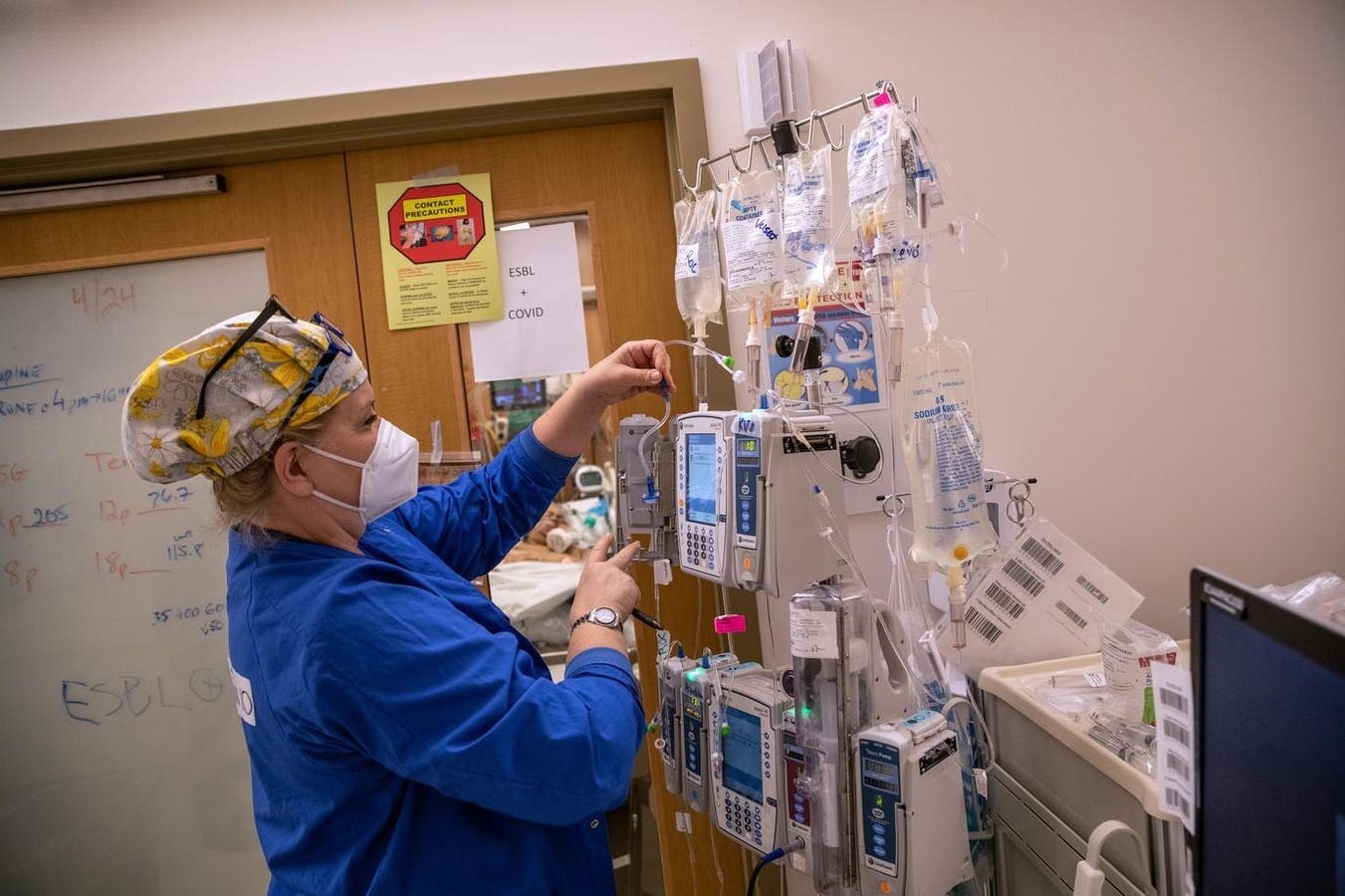
The United States is facing a sharp increase in respiratory illnesses – influenza, COVID-19, RSV, and Pertussis – with a new, more aggressive influenza strain, subclade K of H3N2, driving a significant portion of the surge. Hospital admissions are up sharply: nearly 40,000 people were hospitalized last week, an increase of over 16% from the prior week. This season has already seen at least 15 million illnesses, 180,000 hospitalizations, and 7,400 deaths attributed to the flu alone, with 19 pediatric fatalities recorded.
The situation is compounded by a growing wave of COVID-19 infections and the continued circulation of other respiratory viruses. Health analytics expert Mike Hoerger estimates a 25% chance of exposure in a room of just 15 people, with some states seeing even higher risks. This sustained high exposure rate has long-term implications, including the increasing prevalence of long COVID, for which effective treatment remains elusive and clinics are closing at an alarming rate due to lack of funding.
Airborne Transmission Is The Risk
The scientific consensus now acknowledges that respiratory viruses spread primarily through the air. Even the US Environmental Protection Agency (EPA) confirms airborne transmission as the primary mechanism. This means that improving ventilation in indoor spaces is critical: more frequent air exchanges reduce exposure risk. However, most businesses, schools, and healthcare facilities do not share data on ventilation quality, making informed risk assessment difficult.
The Mask Debate: Why N95s Are Crucial
The debate over respiratory protection centers on the effectiveness of different mask types. Surgical masks (often called “baggy blues”) are widely used but provide minimal protection due to loose fit and high leakage.
Experts now argue that N95 respirators (and equivalent KF94/KN95 models) are the superior choice. Federal agencies like NIOSH and OSHA previously determined that surgical masks offer inadequate protection against airborne contaminants, yet they were controversially deemed equivalent by the Healthcare Infection Control Advisory Committee in late 2024.
A coalition of 50 experts, including researchers from Oxford and Yale, has written to the World Health Organization (WHO) demanding that respirators become the default standard for healthcare workers. They argue that continuing to recommend surgical masks is “scientifically indefensible” and “dangerous.”
Why Clinical Trials Aren’t The Answer
Opponents of this shift cite a lack of definitive clinical trials proving N95 superiority. However, experts like Dr. Adam Finkel dismiss this argument as unethical and impractical. Conducting randomized trials comparing respirator vs. no respirator groups would expose participants to unnecessary risk. He analogizes it to questioning the need for parachutes or lead aprons: “It’s very clear that N95s are (roughly) 90% effective, and why wouldn’t you want 90% less viruses getting into you?”
Economic Costs of Inaction
The financial burden of preventable respiratory illnesses is enormous, exceeding $10 billion annually for influenza alone. Investing in better masks and ventilation systems could significantly reduce these costs. Yet, political decisions are undermining public health: Robert F. Kennedy Jr. has advocated for reducing recommended childhood vaccinations, despite the fact that 90% of flu-related pediatric deaths last season occurred among unvaccinated children. Experts warn that public health considerations are likely to be secondary to economic impacts in policy decisions.
The current trajectory demands a clear and decisive shift toward prioritizing higher-grade respiratory protection. Ignoring the science and relying on inadequate measures will only prolong the pandemic’s impact and expose more people to preventable illness and death.