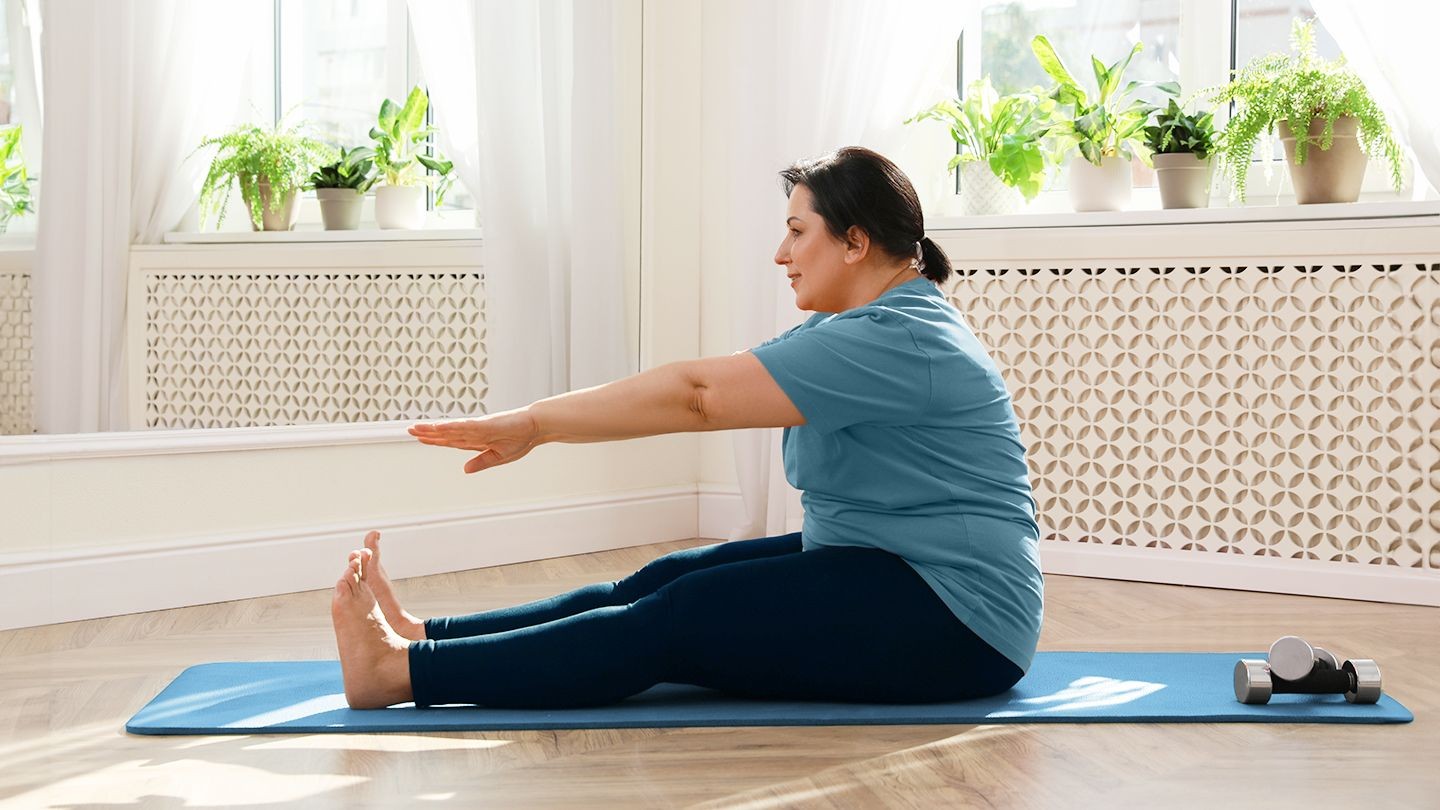
Excess weight often leads to stiffer muscles and aching joints, creating a cycle where pain reduces movement, and less movement increases pain. However, mobility is largely within your control, regardless of weight. Simple lifestyle changes and targeted exercises can significantly improve comfort, independence, and overall well-being.
Prioritize Flexibility and Balance
Muscle stiffness and pain often stem from tense muscles protecting stressed joints. Regular stretching is key: research shows improvements in mobility, stability, and pain reduction can be seen within four weeks. Short, daily sessions (even five minutes) targeting major muscle groups – neck, shoulders, chest, back, hips, legs, ankles – are effective. Consider these stretches:
- Child’s pose
- Runner’s lunge
- Seated forward fold
- Supine twist
Hold each stretch for 30 seconds, repeating once or twice. Modify as needed: widen knees in Child’s pose, or stretch in bed if floor work is difficult. A physical therapist can personalize these movements.
Build Muscle Strength
Weak muscles contribute to reduced joint mobility. Strength training is crucial, not just for movement but for motivation. Studies show that even older adults who lift weights twice a week experience improved physical function and increased energy levels. Start small: body-weight exercises like squats, wall push-ups, lunges, and planks are ideal. If knee or joint pain is an issue, modify movements with chair squats, resistance bands, or water exercises. Aim for 8-12 repetitions twice a week, gradually increasing challenge as you grow stronger.
Improve Posture
Poor posture strains muscles and joints, especially in the neck, shoulders, and back. If you sit for long periods, keep shoulders relaxed, feet flat, thighs parallel to the floor, and elbows bent at 90 degrees. Stretch regularly: arch your back while supporting your head or stretch your chest against a doorway. These small adjustments can make a big difference.
Move Frequently
Break up prolonged sitting with frequent movement breaks. Walk around, do squats or lunges, or chat with colleagues instead of emailing. Even pacing while on the phone or marching in place while brushing your teeth adds up. The key is to avoid static positions for too long.
Maintaining mobility with obesity requires a combined approach: daily stretching, strength training, good posture, and frequent movement. Losing even 5% of body weight can further reduce pain and improve function.
Sources: American Academy of Orthopedic Surgeons, Journal of Obesity and Metabolic Syndrome, Harvard Health Publishing, Biology, Sports Medicine-Open, American Heart Association, Cleveland Clinic, MedlinePlus, Frontiers in Nutrition.