It was the last lap of the 2001 Daytona 500. February 18 had just arrived when the unthinkable happened. Dale Earnhardt, Sr., known simply as The Intimidator, was exiting Turn 4. Sterling Marlin clipped his left rear quarter panel. The black No. 3 Chevrolet lost traction. It slid up the banking and slammed into the wall with a sickening finality.
By the standards of the time, the crash looked almost mundane. Ken Schrader’s car spun into the back of Earnhardt’s wrecked machine moments later. There was no fire. No car went airborne. Schrader climbed out of his totaled Ford and walked away. Earnhardt did not.
The sport was bleeding. In the year prior, Tony Roper, Adam Petty, and Kenny Irwin Jr. had all been killed in competition. The message was deafening: NASCAR had to evolve or die.
The result was a radical departure from tradition. It wasn’t just a safety update. It was a complete reinvention of the stock car.
Why NASCAR Built the Car of Tomorrow
The project didn’t start in a vacuum. It was born out of necessity and backed by years of rigorous research. The goal was twofold. First, keep drivers alive. Second, cut costs for the teams.
The resulting vehicle earned the nickname Car of Tomorrow (COT). It arrived in 2007 after seven years of development. The design was unrecognizable compared to the sleek, manufacturer-specific machines of the 1990s.
The COT was larger. Heavier. Less aerodynamic in the traditional sense. But it was also a tank. The chassis was designed to absorb impact rather than shatter. It was less sensitive to the turbulence created by other cars. This stability allowed drivers to race closer together without the fear of a single tap sending them spinning into the wall.
Uniformity Over Identity
Perhaps the most controversial aspect of the Car of Tomorrow was its uniformity. In the past, Chevrolet, Ford, Dodge, and Toyota built cars that reflected their brand identities. The shapes were distinct. The handling characteristics varied wildly based on manufacturer engineering.
NASCAR changed the rules. Every manufacturer had to use the exact same template. Same chassis dimensions. Same aero package. Same weight.
This move leveled the playing field. It removed the advantage of having the best wind tunnel facility. It forced teams to focus on setup and driver skill rather than manufacturing budgets. For purists, it killed the soul of the sport. For the league, it was a survival strategy.
The Paradox of Safety
The COT delivered on its primary promise. Driver fatalities dropped to zero. The safety cell held up. The energy-absorbing materials worked.
Yet, the reception was mixed. Many drivers hated it. The car was slow to turn. It felt disconnected from the track. It lacked the raw, unpredictable nature of the previous generation.
Dale Earnhardt’s own son, Dale Earnhardt Jr., became one of its harshest critics. He argued that the car was safe, yes, but it was boring. It removed the artistry from stock car racing.
The Car of Tomorrow proved that you could save lives without losing drivers. But it forced the sport to ask a
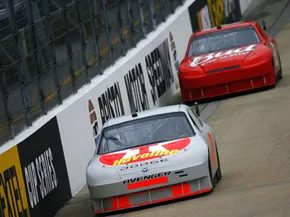

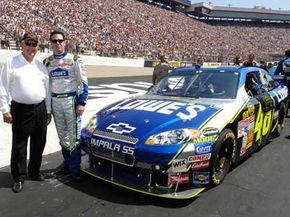
The romance of the “stock” car died a long time ago. You won’t find those showroom-floor sedans on the track anymore. Today’s NASCAR vehicles are steel tube frames wrapped in sheet metal, shoved with massive, old-school V-8 engines. The cars are built to NASCAR’s strict specs. Sure, they wear names like Impala or Fusion to represent Chevy or Ford. But look closer. Those headlights? Just decals. The cars look nothing like what you’d buy at a dealership.
Weight is a hard limit. Every car must tip the scales at a minimum of 3,400 pounds. That’s 1,542 kilograms. And here’s the kicker: at least 1,625 pounds of that weight has to sit on the right side. Why? Because when you hit a wall, that’s the side taking the beating. The extra mass on the right keeps the car planted.
Building the Car of Tomorrow took five years. It survived wind tunnel tests, computer simulations, and brutal on-track trials. It debuted at Bristol Motor Speedway in March 2007. It ran 16 races that year. Originally, NASCAR planned to phase it in slowly, going full-time in 2009. Then they changed their minds. They threw it in every race in 2008. One year early.
Development is messy. Trial and error define the process. At Martinsville in 2007, the new car revealed a flaw. Foam designed to absorb side-impact energy melted. A nearby tailpipe got too hot. The foam smoked during the race. NASCAR reacted fast. They ordered less foam. They added a revised heat shield to protect the driver. Safety isn’t just a goal. It’s a requirement.
Why the Car of Tomorrow Looks So Ugly
Fans spotted the changes immediately in 2007. The cars grew. They got wider. Longer. Boxier. Spoilers on the trunk ballooned in size. You couldn’t tell a Dodge from a Ford, a Chevy from a Toyota. They looked eerily alike.
This wasn’t an accident. Engineers made them slower. The new design is less aerodynamic. It drags. It hits top speeds of 180 to 190 mph. The old cars? They pushed past 200 mph.
Slower cars? Really? That sounds counterintuitive for racing. But NASCAR wanted control. They wanted safety. They wanted drivers to handle the machine, not just survive it.
They added a splitter. This horizontal panel sticks out from the car’s nose. It generates downforce. It pushes the front tires into the track. Combined with the boxy body, it disrupts smooth airflow. The result is a car that is easier to manage. Less speed. More stability.
The Return of the Draft
There is one advantage to that boxy shape. It brings back the draft.
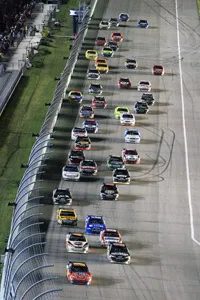
Drafting is pure NASCAR physics. You follow another car closely. Your car sits in the low-pressure wake. Wind resistance drops. You conserve energy. Then, at the perfect moment, you slingshot past the leader. You might even win the race.
The Car of Tomorrow makes drafting more critical than ever. The less aerodynamic shape means the wake is stronger. Drivers have to rely on their skill to slipstream. They have to time their moves. The car doesn’t do it for you. It demands precision.
NASCAR leveled the playing field. Small teams competed with big teams. Manufacturer branding mattered less. The car became the equalizer. The specific make of the vehicle didn’t matter as much as the driver’s ability to read the track and the traffic.
The Spec Racing Debate and Cost Reality
The shift to the Car of Tomorrow didn’t just change how the vehicles looked. It fundamentally altered the competitive landscape, pushing NASCAR closer to spec racing than at any point in its history. In spec racing, the machinery is nearly identical. When every team starts with the same frame, roll cage, and body panels, the engineering gap shrinks. Money still matters, sure, but the sheer advantage of having a better-built car diminishes. The race becomes about who is behind the wheel, not who has the deepest pockets or the fastest wind tunnel.
NASCAR framed this standardization as a necessary cost-saving measure. Before the new design, teams spent fortunes building distinct cars for different track types. You needed a setup for short tracks, another for road courses, and a third for super-speedways. The Car of Tomorrow unified these requirements. One chassis fits all. Most teams still keep multiple cars on hand, largely because crashes happen in practice and qualifying, but the underlying architecture is standardized.
It wasn’t a free lunch for the teams, though. Critics pointed out that the transition required a multimillion-dollar investment. Teams had to scrap their old inventory and build new fleets from scratch. The promised cost reductions wouldn’t trickle down for years, if ever.
Then there’s the fan reaction. Many longtime followers argue that the “run what you brung” era was superior. They miss the variety. They want to see a Dodge beat a Ford because of inherent design advantages, not just driver skill. To them, a series where every car is the same feels less like racing and more like a simulation.
Safety: The Real Driver Behind the Design
The primary justification for the Car of Tomorrow was never style or cost. It was safety. NASCAR engineers were tasked with creating a cockpit that could survive punishment on a scale previously unseen. The goal was simple: save lives.
The proof came quickly. In April 2008, Michael McDowell survived a horrific wreck at Texas Motor Speedway. His Toyota Camry hit the wall at 180 mph (290 km/h) and flipped multiple times. It was a twisted, flaming mess. Yet, McDowell walked away. The announcers on the scene noted the improved safety features immediately.
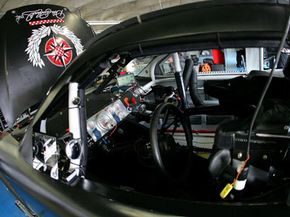
How does the car keep him alive? It’s all about space and absorption. The cockpit is 2 inches (5.1 cm) taller and 4 inches (10.2 cm) wider. The driver sits more centrally, increasing the car’s crumple zones. These zones are engineered to absorb kinetic energy. When impact occurs, the structure deforms, diverting force away from the driver.
The windows are larger, facilitating a quicker escape. The doors are packed with thick foam, and the driver’s side features steel-plated bars for extra protection. The seat itself is more rigid, designed to support the driver under extreme G-forces.
Fuel safety got an upgrade too. The fuel cell is smaller, holding 17.5 gallons (66 liters) compared to the previous 22 gallons (83 liters). The walls of the cell are thicker. Less fuel and a tougher tank mean a lower risk of leaks and fires.
Has it worked? Since its 2007 debut, the car has held up. The last fatality in a NASCAR race was Dale Earnhardt Sr., before the Car of Tomorrow existed. Whether the new design kept him alive or if it prevents future tragedies remains to be seen. The data is still accumulating. But for now, the stats show fewer catastrophic outcomes.
The Fan Verdict
The engineering is sound. The safety record is promising. But do the fans care? Not necessarily. The transition from distinct, brand-specific vehicles to a unified platform left a bitter taste for many. They saw the soul of the sport flattened into a homogeneous blob.
This discontent spilled into the media, where drivers like Dale Earnhardt Jr. became vocal critics. They questioned the aesthetic, the handling, and the spirit of the change. The debate wasn’t just about who was fastest. It was about what racing should represent. The Car of Tomorrow solved the safety crisis. It standardized the competition. But it left a cultural rift that hasn’t fully healed.

The Safety Revolution Nobody Asked For
It’s a paradox that defines modern stock car racing: the Car of Tomorrow was engineered to save lives, yet it nearly cost the sport its soul.
Safety? Undeniable. The chassis is stronger. The roll cage is beefier. The fuel cell is safer. If you’re a physics professor, this machine is a masterpiece.
But ask a diehard fan at the track. You’ll get a different answer.
The Car of Tomorrow has been a hard sell. A very hard sell.
Why Fans Hate the Box
Look at a Gen-4 car from the 90s. Sleek. Curvy. Fast. It looked like a machine built to defy gravity.
Now look at the Car of Tomorrow.
It looks like a refrigerator on wheels. A boxy, rectangular block of sheet metal. Fans didn’t just complain about aesthetics; they hated the physics too. The car is bigger. Heavier. Slower.
And the manufacturers? They used to bring distinct personalities. Ford looked aggressive. Chevrolet looked mean. Toyota looked fresh.
Now? They’re clones. Nearly identical machines wearing different paint jobs. When every competitor looks exactly the same, the soul of the rivalry blurs. It’s hard to root for a brand when the product underneath is indistinguishable from the guy next to you.
The Driver’s Dilemma
Drivers have it worse than the fans. They’re the ones feeling the car’s flaws with every turn.
Handling is the complaint du jour. Veterans say they have to re-learn racing lines on tracks they’ve dominated for decades. The car doesn’t turn like it used to. It’s sluggish. Unresponsive.
Then there’s aero push.
In theory, the new design was supposed to fix aerodynamic instability. In practice, it made it worse. The airflow dynamics create a void in downforce when cars draft. That void seemingly pushes a trailing car toward the wall in the turns. It’s counter-intuitive. It’s frustrating. It’s dangerous, even with the safety upgrades.
Dale Earnhardt Jr.’s Honest Take
Dale Earnhardt, Jr. carries a unique burden here. His father, Dale Earnhardt, died in a crash in 2001. That tragedy is the direct reason the Car of Tomorrow exists. Safety regulations were rewritten in blood.
So when Dale Jr. criticizes the car, it’s not just a driver complaining about a ride. It’s the son of the victim critiquing the solution.
“I think … the car isn’t a finished product,” Earnhardt said in October 2008. “Whenever they decide to move forward and evolve and let that car change and become a better race car, we will be ready to do that. But until then, we really don’t have a choice in the matter.”
He wasn’t wrong. The car was evolving. Slowly. Year by year. Improvements were being made. But the core identity remained. And the frustration remained with it.
Life Over Lap Times
Who is right?
The purists argue that the Car of Tomorrow restores emphasis on driver skill. Without the flashy aerodynamics of the old cars, you can’t hide. You have to drive.
The safety advocates argue that life is paramount. An exciting race means nothing if the competitors are in wheelchairs or worse. A safer car is better for everyone involved. The teams, the sponsors, the fans in the stands.
NASCAR made a choice. They chose safety over spectacle.
They aren’t taking it back.
Earnhardt and other drivers concede that the car is getting better. It’s not the broken prototype of 2007 anymore. It’s refined. Tuned. Accepted, grudgingly, by many.
But it’s never going back to the way it was.
The Car of Tomorrow is now the Car of Today. And it’s staying that way for the long haul.
Dig Deeper into NASCAR Tech
If you want to understand the mechanics behind the controversy, the numbers matter.
- Pit Crew Tools: What are the 10 essential tools that keep teams moving at 15 mph?
- Broadcast Tech: How does NASCAR transmit data live to your TV?
- Track Physics: How does a NASCAR track physically change its rubber content during a race?
- Grooving: How do racing grooves form and affect lap times?
- Car Dynamics: Why is a NASCAR race car described as “loose” or “tight”?
- Aerodynamics: How does downforce actually help a NASCAR race car grip the tarmac?
- Drafting: How does NASCAR drafting work, and why does it create those dangerous “push” effects?
- Penalties: Why is the NASCAR penalty system so hard to understand for casual viewers?
- Wedge Adjustments: How do teams tweak the wedge to compensate for handling issues?
- Camber: Why is camber so critical for tire wear and cornering speed?
The Sources Behind the Story
The debate isn’t just opinion. It’s documented.
- Aumann, Mark. “2001 Daytona 500: Tragedy over triumph.” NASCAR.com. Feb. 14, 2003.
- Bernstein, Viv. “Car of Tomorrow Is Put to the Test Again.” New York Times. April 21, 2007.
- FOX Sports. “Car of Tomorrow vs. Car of Today comparison.” Jan. 17, 2007.
- Murray, Charles J. “GM, Chrysler, Ford, Toyota Roll Out NASCAR ‘Cars of Tomorrow’.” Design News. May 14, 2007.
- NASCAR.com. “Car of Tomorrow to make race debut in 2007.” Jan. 23, 2006.
- NBC Sports. “Car of Tomorrow has become Car of Today.” Oct. 22, 2008.
- Pack, Bryan. “NASCAR’s ‘Car of Tomorrow’ Not Much Wiggle Room.” Motor. March 2008.
- Rodman, Dave. “Car of Tomorrow hits track at Atlanta test.” NASCAR.com. Nov. 1, 2005.
- Smithson, Ryan. “NASCAR legends like Car of Tomorrow.” NASCAR.com. Mar. 19, 2006.
- Stewart, Ben. “NASCAR’s Controversial Car of Tomorrow, Here Today.” Popular Mechanics. April 2007.