Winter nights are short. The cold comes in sharp, often freezing the windows before you can even get the kettle boiling. When the temperature drops, the desire to spend hours chopping vegetables fades fast. You want heat. You want something that hits the spot immediately.
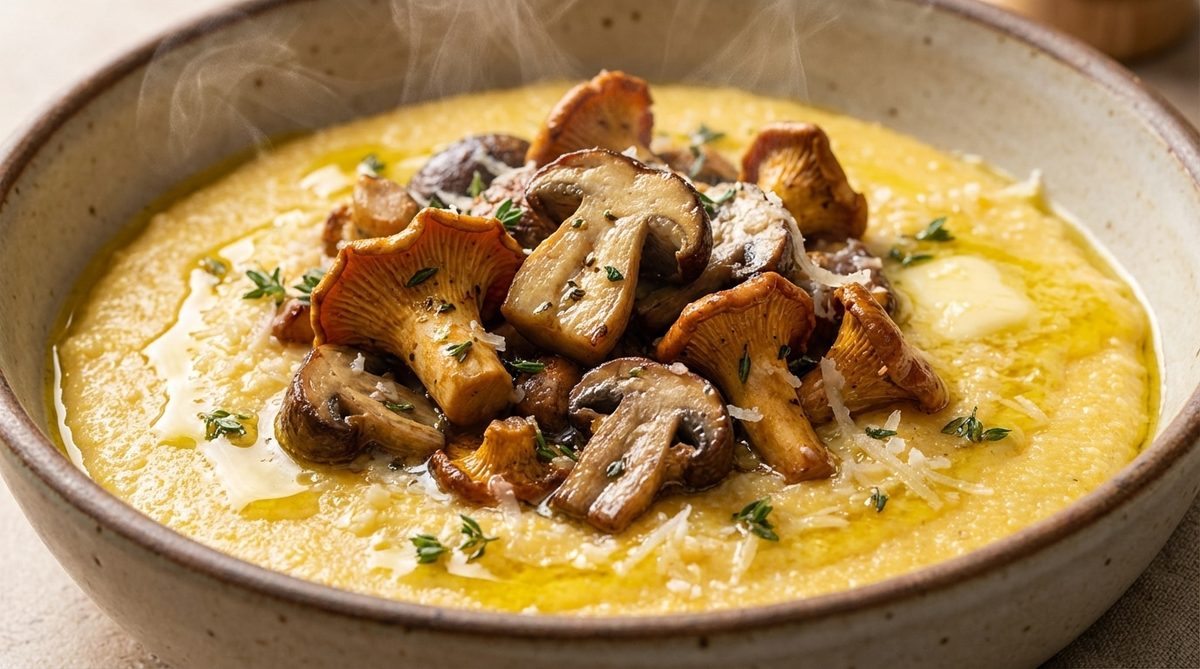
A bowl of golden, velvety polenta topped with toasted mushrooms is the answer. It is not a complicated dish. It does not require rare ingredients. It is a simple assembly of pantry staples that turns a boring weeknight into a moment of pure comfort. The texture is thick and creamy, carrying deep, earthy notes that taste like the forest outside, even if you are three miles from any trees.
The 4 ingredients for a pantry feast
The magic of winter cooking often lies in elevating modest elements you probably already have.
- Instant polenta : This is your base. Do not worry about the granular texture you might expect from standard semolina. High-quality instant polenta, made from corn, waits to be hydrated and seasoned properly to become a cozy bed for the other flavors.
- Mushrooms : These are the star of the season. Use firm Paris mushrooms or a frozen forest mix for added character. They provide the essential umami depth that makes the dish feel complete.
- Cream or Mascarpone : This ties everything together. It adds a richness that clings to the palate.
- Grated Parmesan : A true parmesan adds a saline punch that cuts through the creaminess.
How to prepare ultra-soft polenta with mushrooms
This is a fast recipe. It proves that you only need to cook instant polenta with broth, add pan-seared mushrooms, a splash of cream, and cheese to get a hot, nourishing meal. Here is what you need for four people:
- 250 g of instant polenta
- 1 liter of vegetable broth (homemade or organic)
- 400 g of Paris mushrooms or forest mix
- 2 tablespoons of heavy cream or liquid cream
- 60 g of aged parmesan
- A knob of butter for cooking
Start by cleaning and roughly slicing your mushrooms. Sear them in a hot pan with the butter until they are well-browned. This step is critical. It concentrates the aromas and prevents the mushrooms from releasing water into the final dish.
While the mushrooms cook, bring your vegetable broth to a boil in a large pot. Pour the polenta in a rain-like stream while whisking vigorously to avoid lumps. Immediately lower the heat. Let it cook for two to three minutes until the semolina swells and becomes perfectly smooth.
Once the polenta is cooked, stir in the cream and half of the parmesan directly into the pot. This loosens the mixture and gives it a silky texture.
Serve immediately in deep bowls. Form a generous well in the center. Place the pan-seared mushrooms on top. Sprinkle with the remaining cheese. Serve without waiting. The contrast between the melted base and the roasted topping creates an unforgettable taste experience.
Why the texture matters and how to save leftovers
The difference between a compact porridge and a restaurant-worthy dish comes down to a few details.
Hydration is key. Keep some hot liquid nearby when mixing. Polenta absorbs a lot and sets quickly as it cools. If it feels too thick, add a splash more broth.
Fat goes off the heat. Always add butter or cream after you remove the pot from the flame. This preserves the emulsion and keeps the dish glossy.
If you have leftovers, you can transform them the next day. Spread the leftover polenta on an oiled baking sheet about two centimeters thick. Let it cool completely. Once set, cut it into sticks or slabs. Pan-fry these pieces in butter until the crust is crispy and the inside is soft again. It is a delicious anti-waste tip that gives your dinner a second life.
Is it worth the effort? For a midwinter night when you need to warm up, yes. It is simple, satisfying, and it relies on ingredients you likely already have in your kitchen.
Swapping the Cheese for Something Sharper
You can ditch the parmesan. If you want more bite, swap it for creamy gorgonzola or taleggio. Both melt slowly into the hot semolina, adding a pungent depth that plain parmesan just doesn’t hit. It changes the whole flavor profile. It goes from mild and nutty to sharp and complex. One spoonful of truffle oil drizzled over the top at the table also works. It turns a standard winter plate into something that feels expensive. You don’t need expensive truffles for that. Just the oil. It does the heavy lifting.
Adding Texture and a Runny Yolk
Want a crunch? Toast some hazelnuts or walnuts until they smell nutty. Crush them roughly. Scatter them on top. The contrast between the soft polenta and the hard nuts is where the interest lies.
Then there is the egg. Place a soft-boiled or poached egg right in the center. When you cut into it, the yolk runs out. It mixes with the cream and mushrooms. You have just made a sauce. No extra steps. No reduction. The yolk does the work. It binds the dish together with a richness that feels almost impossible for something made in twenty minutes.
Why This Works in January
This is what winter cooking should be. Fast. Cheap. Comforting. You don’t need to spend hours in the kitchen to get a meal that makes you feel warm. A bag of polenta in your pantry is a quiet game changer for those freezing evenings. It holds up to improvisation. It accepts the truffle oil, the sharp cheese, the nuts, the egg. It is a canvas, not a constraint.
The classic mushroom and parmesan version is solid. But these tweaks make it better. They make it yours. The goal isn’t perfection. It is warmth. It is a plate that tastes like the room is finally heated.