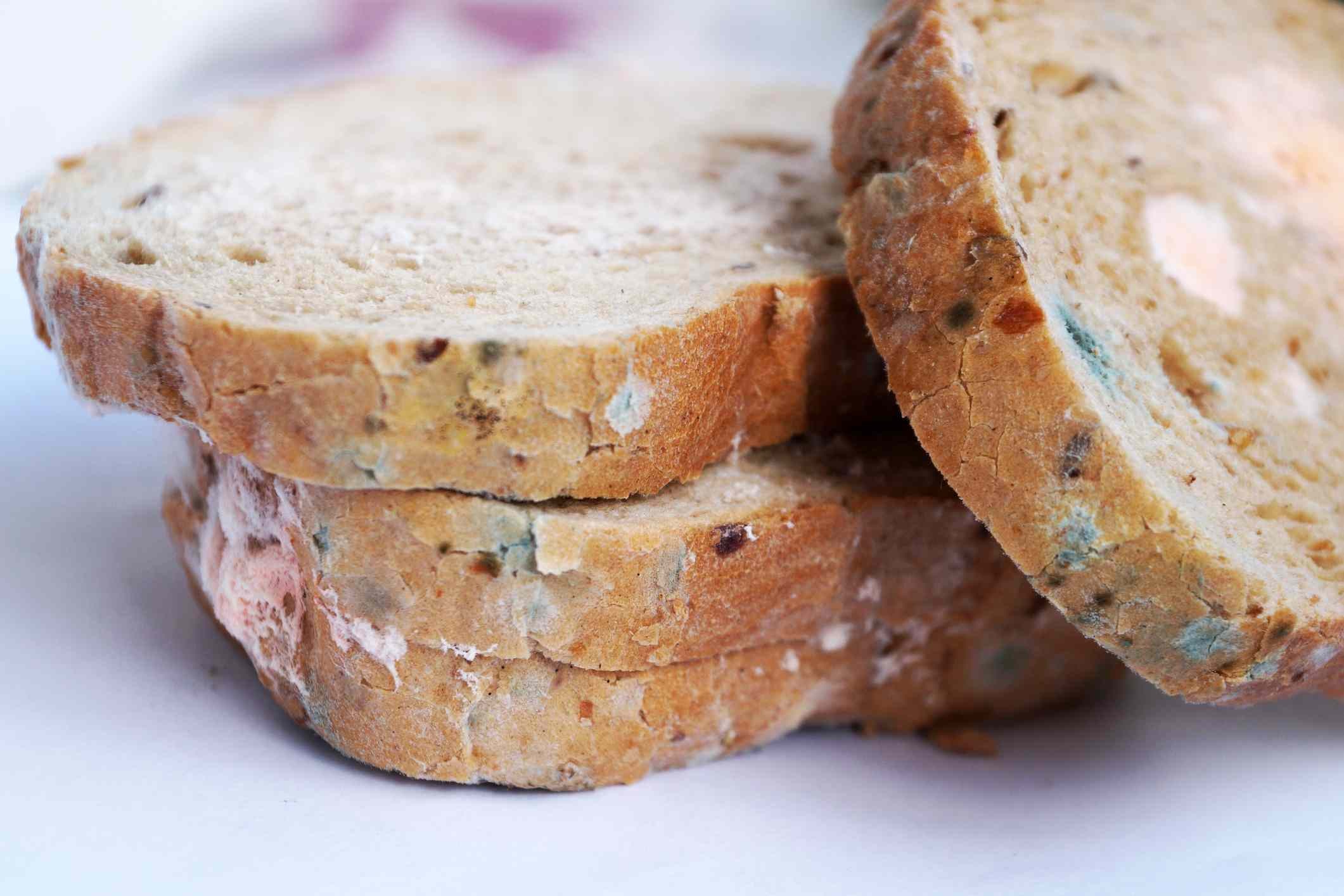
There’s a moment every bread-eater fears. You pull a slice from the bag. Or maybe the loaf. And there it is. A fuzzy patch. Green. White. Black.
Your instinct? Scrape it off. Toast the rest. Save the money.
Don’t do it.
The short answer to whether you can eat moldy bread is a hard no. But if you’re skeptical—and honestly, why wouldn’t you be?—let’s break down exactly why that moldy loaf belongs in the trash, not on your toast.
Why You Can’t Just Scrape Away Bread Mold
We’ve all seen the advice about hard cheeses or carrots. You cut around the mold, keep the good part. It feels efficient. It feels smart.
With bread? That logic falls apart fast.
Bread is porous. Think of it like a sponge. The visible fuzzy bit you see on the surface? It’s just the tip of the iceberg. Underneath, the mold’s root system—called hyphae—has likely burrowed deep into the crumb. You can’t see it. You can’t touch it. But it’s there.
“Cutting off the mold doesn’t get its roots, so it isn’t an effective way to clean the rest of the bread.” — Margot Vigeant
Grace Derocha, a spokesperson for the Academy of Nutrition Dietetics, puts it bluntly: when mold is visible on bread, the product has already been colonized by fungi. The visible spot is just proof of what’s already happened elsewhere in the loaf.
And here is the kicker. Some of those fungi produce mycotoxins.
These are harmful compounds. They can cause gastrointestinal distress. In some cases, they trigger more serious health issues. This is especially true for vulnerable groups: children, pregnant people, and anyone with a compromised immune system.
Can you tell which mold is harmless and which is dangerous? No. Not without a lab test. So you assume the worst. Discard the bread.
What’s Actually Growing on Your Loaf?
When you see that green, black, or white fuzz, you are looking at a colony. These are microorganisms producing tiny spores. They float through the air. They land. They grow.
Bread is basically a buffet for them. It’s moist. It’s nutrient-dense. And if it’s sitting on a sunny countertop? It’s an incubator.
Common culprits include Rhizopus nigricans, which shows up as fluffy white growth with black dots. Or Penicillium species. Or Aspergillus niger. These are the classic “bread molds.”
Commercial breads have preservatives to fight this off. But once the package is open? Or if the bread is old? The additives lose their fight. Homemade bread, lacking those chemical shields, goes bad even faster.
If it’s past its shelf life? It’s already losing.
The “Cut It Off” Trap
This is where people get stuck. A loaf of sliced bread. One slice has a spot. The rest looks fine. Why toss the whole thing?
Because of the way sliced bread is packed.
Margot Vigeant, a chemical engineering professor at Bucknell University, points out that in a tight stack of slices, mold can grow through the bread and cross-contaminate neighboring pieces. Even if you pull off the obviously moldy slice, the invisible spores or hyphae might have reached the ones next to it.
You aren’t left with 99% clean bread. You’re left with bread that has been compromised.
For firm foods? Different story. The USDA says you can cut one inch around and below mold on hard cheese or dense veggies like carrots. The texture doesn’t let mold penetrate deep. Bread’s texture does. It absorbs everything.
So, keep the cheese. Trash the bread.
How to Keep Your Bread Fresh (Without Mold)
You don’t have to live in fear of stale or spoiled carbs. You just need to change how you store it.
Stop letting it breathe on the counter.
Mold thrives in warmth and moisture. A sunny kitchen counter is a gift to spores.
Try these fixes:
- Cool and Dry: Keep bread in a bread box or a pantry. Somewhere away from the heat source. Away from the direct sunlight.
- Seal It Tight: Air contains spores. Keep them out. Leave the bread in its packaging if you’ll eat it in a day or two. Or move it to an airtight container once opened.
- Freeze It: This is the best move for longevity. Freezing stops mold dead in its tracks.
Want to make it easier later? Slice the loaf before you freeze it. Then, you can toast straight from the freezer. No thawing needed.
Here is the reality of shelf life. Homemade bread? It spoils quick. Eat it within a day or two.
Commercial bread? It has preservatives. You can leave it on the counter for two to four days. Put it in the fridge for up to two weeks (though this can speed up staling). Toss it in the freezer for up to three months if you won’t get to it.
But once you see the fuzz? Don’t negotiate. Don’t scrape. Don’t eat.
There is no “safe” moldy bread. There is just bread that used to be safe, and now isn’t.